

The word indoor in the government indoor LED screen is not a location note. It is a spec. It sets the brightness, the pixel pitch, the price, and whether the screen is even right for the room it is going in.
Get that one word right, and the rest of the decision gets easier. Get it wrong, and you have bought a screen that is too dim, too coarse, or too expensive for the wall it lives on.
This guide is for the facility managers, IT and AV directors, and procurement teams specifying one. It walks through what indoor actually changes about the spec, where these screens go in a public building, how a custom build works, and what a government purchase has to clear before it ships.
Why Indoor Changes the Whole Spec
An indoor screen and an outdoor sign are different products, not the same unit in different places. Three things move when you go inside.
Brightness drops. Interior light is controlled, so most indoor LED runs 600 to 1,500 nits instead of the 5,000 and up that an outdoor sign fights the sun with. Pixel pitch tightens because people stand close enough to see the dots, so the picture has to be finer. And weather sealing disappears, since there is no rain or dust to keep out, which also lowers the cost. What remains is the demand to run all day without failing, so an indoor government screen is still built for continuous duty.
Pitch is the spec that follows the room most directly. The closer people stand, the finer it needs to be.
| Room | Typical pitch | Why |
|---|---|---|
| Operations center or EOC | 0.9 to 1.5 mm | Read from a few feet for hours, dense data |
| Lobby or council chamber | 1.5 to 2.5 mm | Read across the room, presentation, and welcome |
| Transit concourse or atrium | 2.5 to 4 mm | Read from a distance across a large hall |
Where Indoor Screens Earn Their Place
Most government interiors use a screen in one of a few rooms. The lobby or atrium gets a welcome and wayfinding wall, the first thing the public sees. Operations centers and emergency management floors run a fine-pitch video wall that the whole team reads at once, the same build behind our operations center walls. Council chambers and courtrooms use a display for presentations and the public record, where the gallery and the dais both have to see it clearly.
Beyond those, transit concourses carry arrival and departure boards, and public universities and school districts run screens in commons and indoor athletic spaces. What plays on all of them, from schedules to alerts, is the subject of our content these screens carry a guide. The screen is the hardware; the room decides its size and its pitch.
Specifying and Buying a Government Indoor LED Screen
Indoor LED is modular, which is its quiet advantage for public buildings. A custom indoor LED build sizes the display to the exact wall, chamber front, or alcove instead of forcing a fixed panel size, so a feature wall fits the architecture rather than fighting it. When agencies ask for a custom government indoor LED screen manufacturer, that modularity is usually why.
The buying rules are the same ones that govern any federal display. For most federal purchases, the Trade Agreements Act limits the buy to products made in the United States or a designated country, and the screen should ship with country-of-origin documentation. Federal projects also expect a Section 508 accessibility report on the hardware. A government indoor LED screen supplier that works in this market has both ready, and if you are still weighing vendors, our guide to choosing a supplier runs through the test. Budget for the mount, the processor, content software, and installation alongside the panel, and get it itemized for the file.
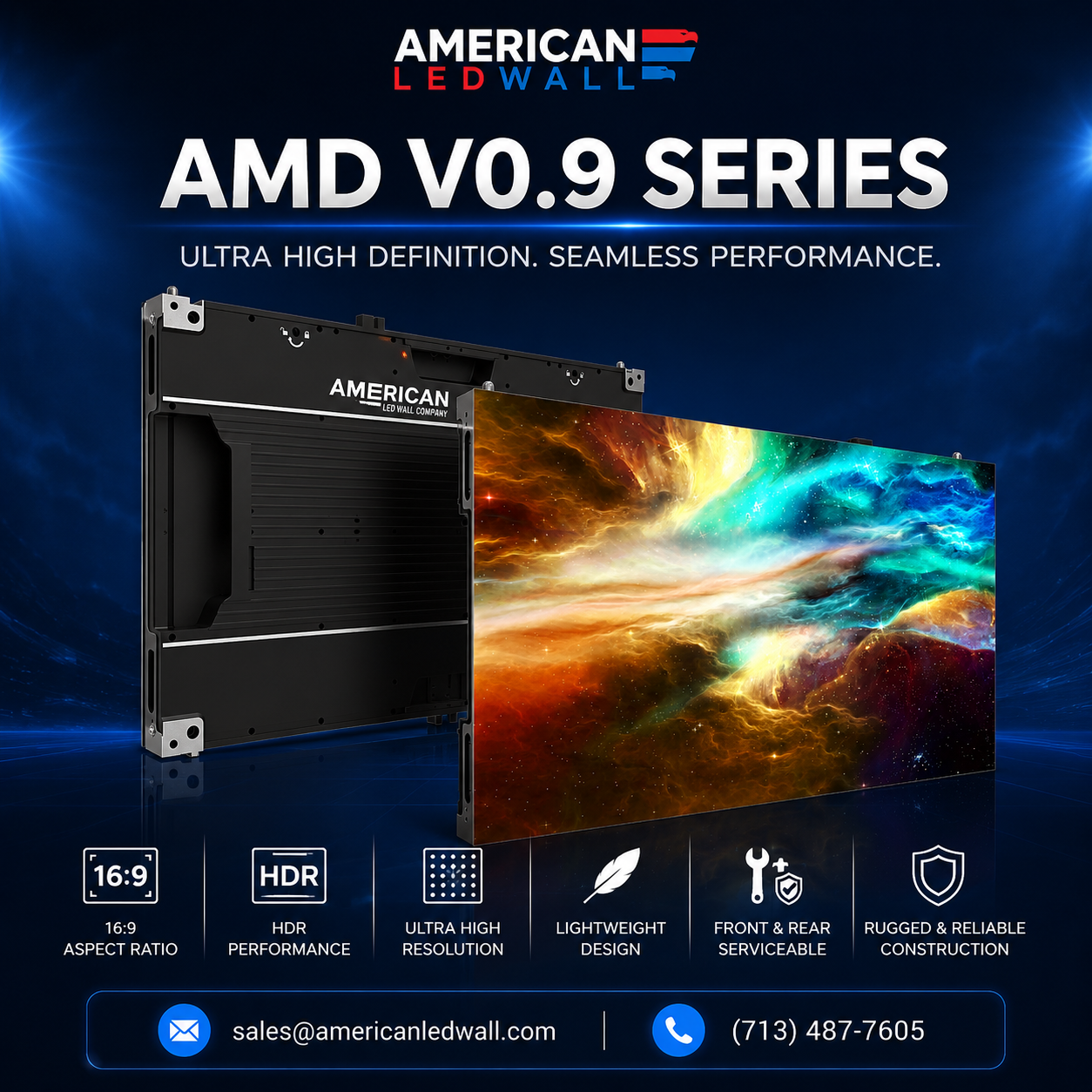
Indoor Panels for Government Interiors
Three fine-pitch panels that cover most indoor government rooms, from an up-close operations wall to a concourse board.


Frequently Asked Questions
What is a government indoor LED screen?
A government indoor LED screen is a direct-view LED display built for a public-agency interior, such as a lobby, control room, council chamber, or transit concourse. It uses a finer pixel pitch and lower brightness than an outdoor sign because people stand closer and the light is controlled, and for a federal buy, it is specified to meet sourcing and accessibility rules.
What pixel pitch should an indoor government screen use?
It depends on how close people stand. An operations center read from a few feet wants a fine 0.9 to 1.5 mm pitch, a lobby or chamber read from across the room suits 1.5 to 2.5 mm, and a large concourse read from a distance can use 2.5 to 4 mm. Finer pitch costs more, so match it to the viewing distance rather than overbuying.
How bright does an indoor government screen need to be?
Most indoor LED screens run 600 to 1,500 nits, far less than the 5,000 nits and up an outdoor sign needs, because interior light is controlled. A lobby with a wall of windows sits at the higher end of that range, and a dim control room at the lower end.
Can an indoor government screen be custom-sized?
Yes. Indoor LED is modular, so a custom government indoor LED screen manufacturer can build the display to the exact width and height of a wall, a chamber front, or an alcove, rather than forcing a fixed size. That is one reason agencies choose LED over a fixed-size panel for a feature wall.
Do indoor government LED screens need to be TAA compliant?
For most federal purchases, yes. The Trade Agreements Act limits government buys above a threshold to products made in the United States or a designated country, and the display should come with country-of-origin documentation. Federal projects also expect a Section 508 accessibility report. State and local rules vary by jurisdiction.
Is LED or LCD better for an indoor government display?
For a large, seamless wall, a whole room reads, direct-view LED wins because it tiles with no bezels and scales to any size. For a single small screen at a desk or a kiosk, an LCD can be the cheaper fit. The deciding factors are the size of the surface and whether seams are acceptable.
Let the Room Set the Spec
A government indoor LED screen rewards planning the room first. Every good install works backward from the space. How far do people stand, how bright is the room, how big is the wall, and what does the purchase have to clear? Answer those, and the screen almost specifies itself.
American LED Wall builds indoor LED to fit, sized to the wall, and documented for public buy. Tell us the room and the rules it answers to, and we will spec the pitch, the brightness, and the size, and show the country of origin and the paperwork with it.
Fine Pitch · Indoor Rated · TAA Compliant
Not Sure Which Pixel Pitch Your Room Needs?
Send us the room, the viewing distance, and how the screen gets used, and we will recommend a pixel pitch and the model that fits it. Every spec starts from the space, not a catalog page.
