
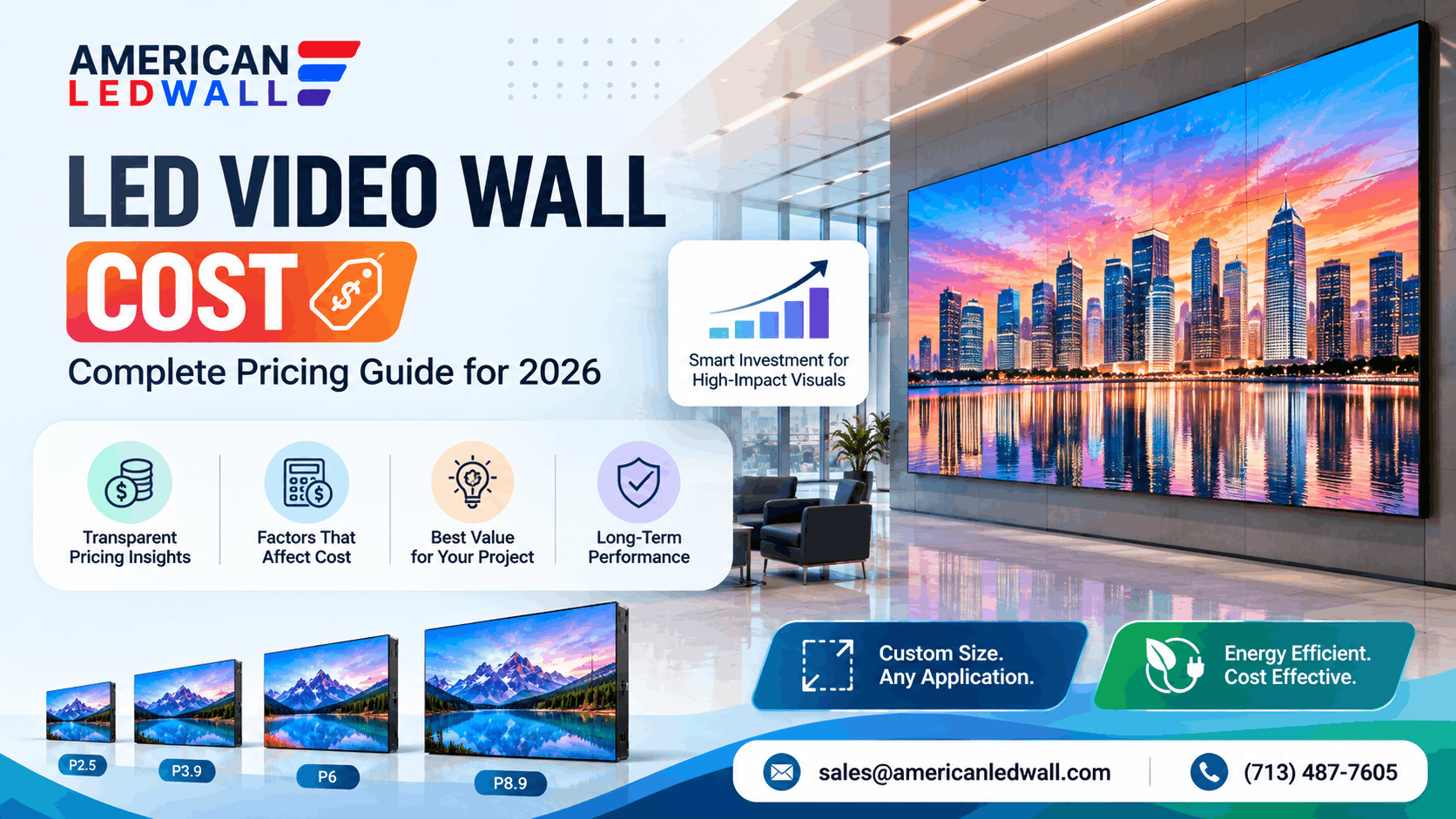
LED video wall cost is almost never a single number, and any page that hands you one is guessing. As a quick benchmark, most installed walls run about $500 to $2,500 per square foot, which puts a typical indoor wall somewhere between $30,000 and $100,000. The reason there is no single price is that a video wall is not a product off a shelf. It is built from panels that tile into whatever size your space needs, so the price bends around your room, your pitch, and how far back people sit.
What this guide gives you instead is the real math: the price per square foot, everything that lands on the quote, the bills that keep coming after install, and honest ranges for a church, an office, a store, and a few other rooms. Call it the cost of LED wall setups, or the cost of LED video wall projects, the same math runs underneath. We quote and install these walls across the country, so the numbers here come from real projects rather than a spec sheet. Figures current as of August 2026.
Start With LED Video Wall Cost Per Square Foot
Panels are sold by the square foot, and one number sets the rate: pixel pitch, the distance in millimeters between the LEDs. Tighter pitch, more LEDs, sharper image, higher price. Here is where things sit in 2026.
|
Pixel pitch |
Where it fits |
Installed, per square foot |
|
P4 to P8 (coarse) |
Outdoor boards, far viewing | $400 to $900 |
| P2.5 to P3 | Big indoor rooms, distant seats |
$700 to $1,300 |
|
P1.5 to P1.9 (fine) |
Lobbies, boardrooms, retail | $1,400 to $2,400 |
| Under P1.2 (premium) | Close-up, high-end control rooms |
$2,500 to $4,000+ |
If you dug up an LED video wall cost per square foot 2024 chart, or an LED video wall cost per square foot 2025 one, keep using it. Panel prices barely moved, so the LED video wall cost per square foot in 2026 lands in the same place. When people ask how much LED video walls cost as a category, these per-foot rates are the honest floor to build from.
One rule beats your budget every time: distance decides pitch. Sit ten feet back, and a P2.5 wall looks identical to a P1.2 wall that costs three times as much, because your eye simply cannot resolve the difference at that range. The fastest way to overspend is buying a fine pitch nobody is close enough to notice.
Why Two Walls the Same Size Can Cost Double
Ask three vendors how much does a video wall cost and you can get three very different answers for the same square footage. Five things explain the gap, and knowing them is how you read any quote for LED wall cost, video wall cost, or the cost of LED screen panels.
Pitch is the heavyweight. Halve the gap between LEDs, and you roughly quadruple the LED count, so fine pitch climbs fast. Size is next, and it scales in a hurry, since more area means more panels. Then brightness: a sealed 5,000-nit outdoor cabinet runs several times the price of an 800-nit indoor one. Cabinet grade matters too, because refresh rate, color processing, and serviceability separate a wall that lasts from one that fades, and a suspiciously low LED display cost usually points to a low-grade panel. Last comes the part buyers forget, the processor that drives the image, plus the steel, power, and labor to hang it. Two quotes for LED screen cost or LED display screen cost can differ by tens of thousands on that last line alone.
Read the Quote Line by Line
Most cost guides go quiet here, and it is exactly where people get burned. When you ask how much does an LED video wall costs, the real answer has several lines, not one. A proper quote should show:
- The LED panels are priced by the square foot.
- The video processor spreads the picture across the wall. Skip it, and you own a stack of panels, not a display.
- The mount, whether that is a wall bracket, a floor stand, or a welded steel frame.
- Cabling, power runs, and sometimes an electrical upgrade.
- Installation labor, which is skilled work, since fine pitch has to align to the millimeter.
- A few spare modules, because parts do fail across a decade.
- The warranty, both its length and what it actually covers.
Two quotes only tell you something when they carry the same lines. A cheaper one that quietly drops the processor or the structure is not cheaper; it just delays the bill. Insist on an itemized LED wall installation cost so you can compare like for like. As a rough gauge, the LED video wall installation cost percentage of the whole project usually runs somewhere around 10 to 20 percent, depending on the site. If you are pricing a room outside the US, an LED video wall installation cost per square meter, cinema operators ask about follows the same logic, just measured in meters.
The Costs That Show Up After the Install
A wall keeps costing money after the truck leaves, and almost nobody tells you that part. Two costs matter: power and upkeep.
Power you can estimate yourself. An indoor wall pulls roughly 25 to 40 watts per square foot in normal use. Take an 84-square-foot wall, 12 by 7 feet, at about 30 watts per foot. That is nearly 2.5 kilowatts. Run it 12 hours a day, and you burn about 30 kilowatt-hours daily. Commercial power in the US averages around 13 to 14 cents per kilowatt-hour, according to the US Energy Information Administration, so that wall costs close to $4 a day, or about $1,500 a year. Fewer hours or a smaller wall drops it quickly, and your state rate can push it up or down, since prices range widely across the country.
Upkeep stays light on a decent wall. Panels are rated near 100,000 hours, past a decade of daily use, so the real spend is the occasional module swap and a recalibration now and then. Now put it all together over ten years for that same lobby wall, the full picture, no sticker price, shows you:
|
What you pay for |
Ten-year estimate |
|
Panels, processor, structure, install |
$70,000 |
| Electricity, about $1,500 a year |
$15,000 |
|
Maintenance and recalibration |
$4,000 |
|
A spare module here and there |
$2,000 |
| Content design, varies a lot |
$5,000+ |
| Rough ten-year total |
Around $96,000 |
The panels are the loud number, but ownership quietly adds a third on top. That is why the cheapest panel rarely wins the ten-year race, and why a well-built wall pays you back in low running costs.
What It Runs for Your Kind of Space
People search for a price, hoping to find their own situation, so here are turnkey ranges, meaning panels, processor, structure, and installation all in.
A church is one of the most common buyers, since one wall handles lyrics, video, and live camera all at once. A typical church LED wall costs for a bright P2.5 or P3 wall behind the stage, around 15 by 8 feet, sits near $45,000 to $90,000. Here is one that played out recently. A growing congregation in Texas was fighting a dim projector that washed out under stage lights, unreadable from the back rows. They put in a 16-by-9-foot P2.5 wall for about $78,000, which covered the panels, the processor, a steel frame, cabling, and a weekend install. Power runs them near $1,300 a year, since services and rehearsals keep it on for many hours a week. The smart move was the pitch: at P2.5, plenty sharp for a room where the closest seats are past fifteen feet, they sidestepped the far higher bill of a fine-pitch wall they did not need. Match the pitch to the distance, budget the running cost up front, and the surprises disappear.
A corporate boardroom leans the other way. Close viewing wants a fine P1.5 to P1.8 pitch, so a 10 by 6 foot wall runs about $40,000 to $80,000. These rooms usually pull from the fine-pitch indoor panels we build for exactly that close, sharp look.
A retail window or entrance wall, around 8 by 5 feet, costs closer to $20,000 to $45,000, depending on pitch and brightness.
A control room running around the clock with redundancy climbs to $60,000 to $150,000 and up, since these demand the best build.
An outdoor advertising board, a coarse-pitch weatherproof wall around 10 by 6 feet, costs between $30,000 and $70,000, because sealed outdoor cabinets and a heavier structure add cost. A direct view LED video wall always costs more than a tiled LCD for the same size, and the next section covers when that premium is worth paying.
None of these are quotes, only starting points. To get close to a real figure for your own room, size it with the calculator on our site, which works as an LED wall cost calculator by pinning down the pitch and square footage in about a minute.
Rent, Lease, or Buy
Not every project should have a wall. Three paths, and the right one depends on how long you need it.
For a one-time event, a concert, a conference, or a trade show, rent it and skip everything else. An LED video wall rental cost tracks size, days, and city, and a single event often runs a few thousand dollars against tens of thousands to buy. That video board cost is a fraction of ownership, and a short LED video wall hire cost lets you walk away with no install, no structure, no upkeep. Location does swing the number, though. An LED video wall rental cost Las Vegas buyers see during a big convention week climbs with demand, and any major event city behaves the same, so lock your LED wall rental cost in early.
If you want the wall long term but not the upfront hit, leasing spreads it out. A $60,000 wall on a multi-year lease might run somewhere around $1,300 to $1,800 a month, depending on term and rate. The honest math: buying costs less across the full life, since you pay no financing, while leasing costs more overall but guards your cash and lets you upgrade sooner. Keeping the wall for a decade, buy. Refreshing often or protecting cash flow, lease. Ask any supplier to price both.
Where You Can Actually Save
You can spend less without ending up with junk that dies in a year. A genuinely low-cost video wall comes from smart choices, not a rock-bottom panel.
The biggest saver is pitch discipline: match it to the viewing distance and refuse to pay for sharpness nobody can see from their seat. Stick to standard cabinet sizes, since odd custom dimensions cost more to build and service. Size the wall to the room and the seating, not to impress. When money is tight, a lease on a quality wall usually beats buying a cheap one that fails early. And always pull itemized quotes, because as you compare what just video walls cost from one vendor to the next, only a line-by-line breakdown shows you which price is truly lower rather than simply lighter on detail.
LED or LCD?
There is a cheaper cousin worth knowing. An LCD video wall tiles LCD panels with thin seams between them, while a direct view LED wall shows one unbroken surface. For small walls seen up close, LCD can start lower.
|
LCD video wall |
Direct view LED |
|
|
Seams |
Thin lines between panels |
None, one surface |
|
Best size |
Small, up to about 110 to 130 inches | Any size, scales well |
| Starting price | Lower on small walls |
Higher, but seamless |
|
Outdoor |
Limited | Strong when sealed |
| Lifespan | Shorter |
Near 100,000 hours |
The break-even point sits around 110 to 130 inches. Under that, an LCD wall or a single large display often wins on price. Above it, or anywhere a seam would slice through your content, LED earns its premium with a clean picture and a longer life. If your space is an unusual shape or size, that is where a custom build makes more sense than forcing a standard grid.
The Panels We Build for This
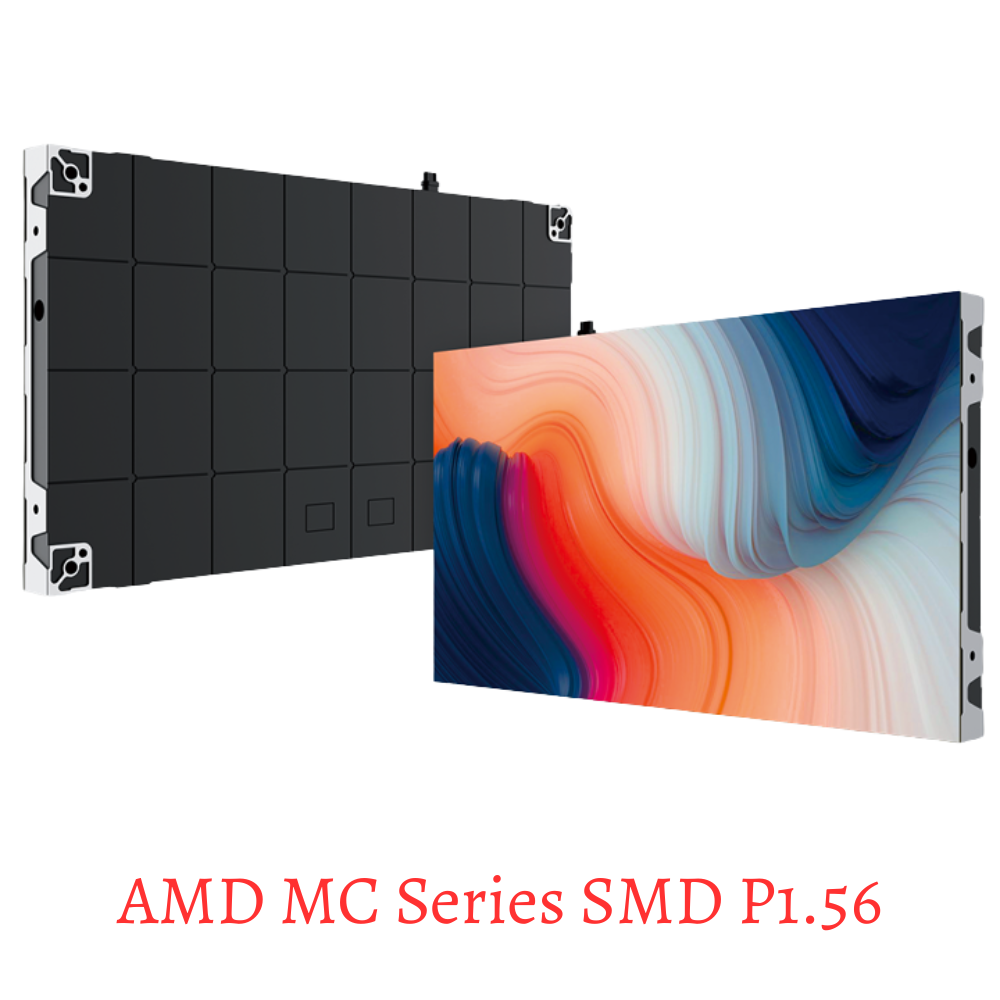
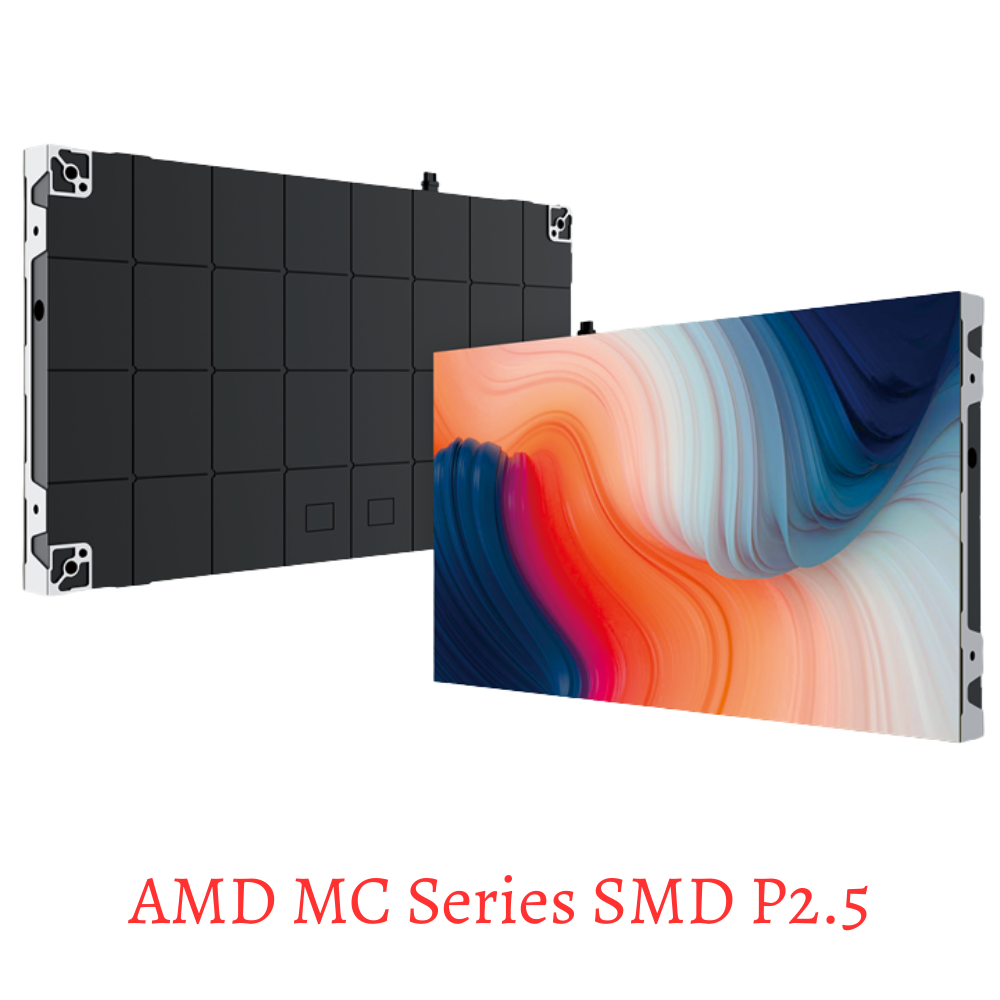
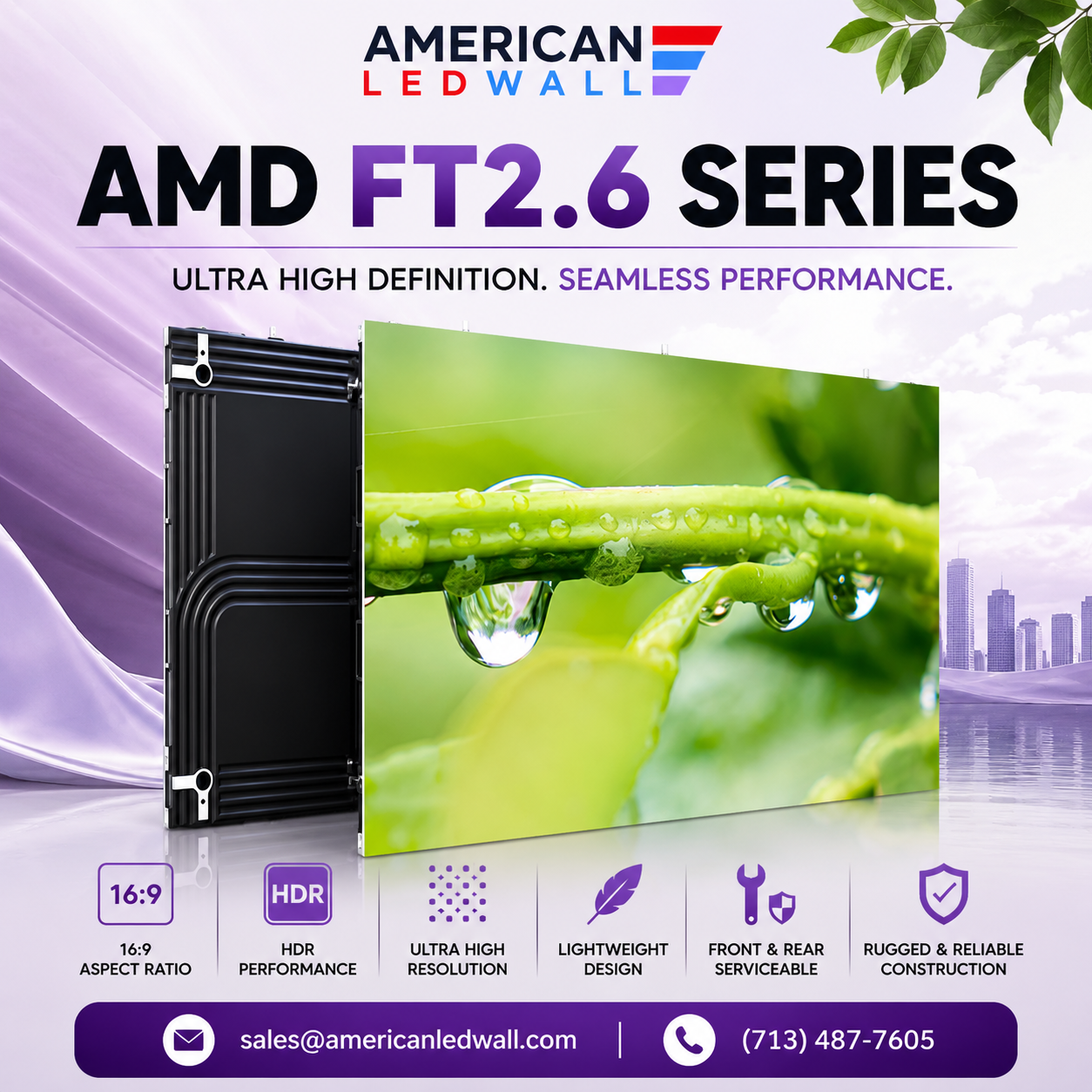
A few options that cover most projects, from fine-pitch indoor walls to outdoor boards. Sizes and pitches vary, so tell us your room and viewing distance, and we will match you to the right one and a real price.
FAQs
How much does an LED video wall cost?
Most installed walls run about $500 to $2,500 per square foot, so a typical indoor wall lands around $30,000 to $100,000 turnkey. Pixel pitch drives the price.
What is the cost of an LED video wall per square foot?
In 2026, expect roughly $400 to $900 for coarse outdoor pitch and $1,400 to $2,400 for fine indoor pitch, install included.
How much does a church LED wall cost?
A bright P2.5 or P3 sanctuary wall usually runs about $45,000 to $90,000 turnkey, depending on size and pitch.
Is it cheaper to rent or buy an LED video wall?
For a one-time event, renting is far cheaper. For long-term use, buying costs less over the life of the wall.
What is included in an LED video wall quote?
A full quote covers panels, a video processor, mounting structure, cabling, installation labor, spare modules, and a warranty.
