
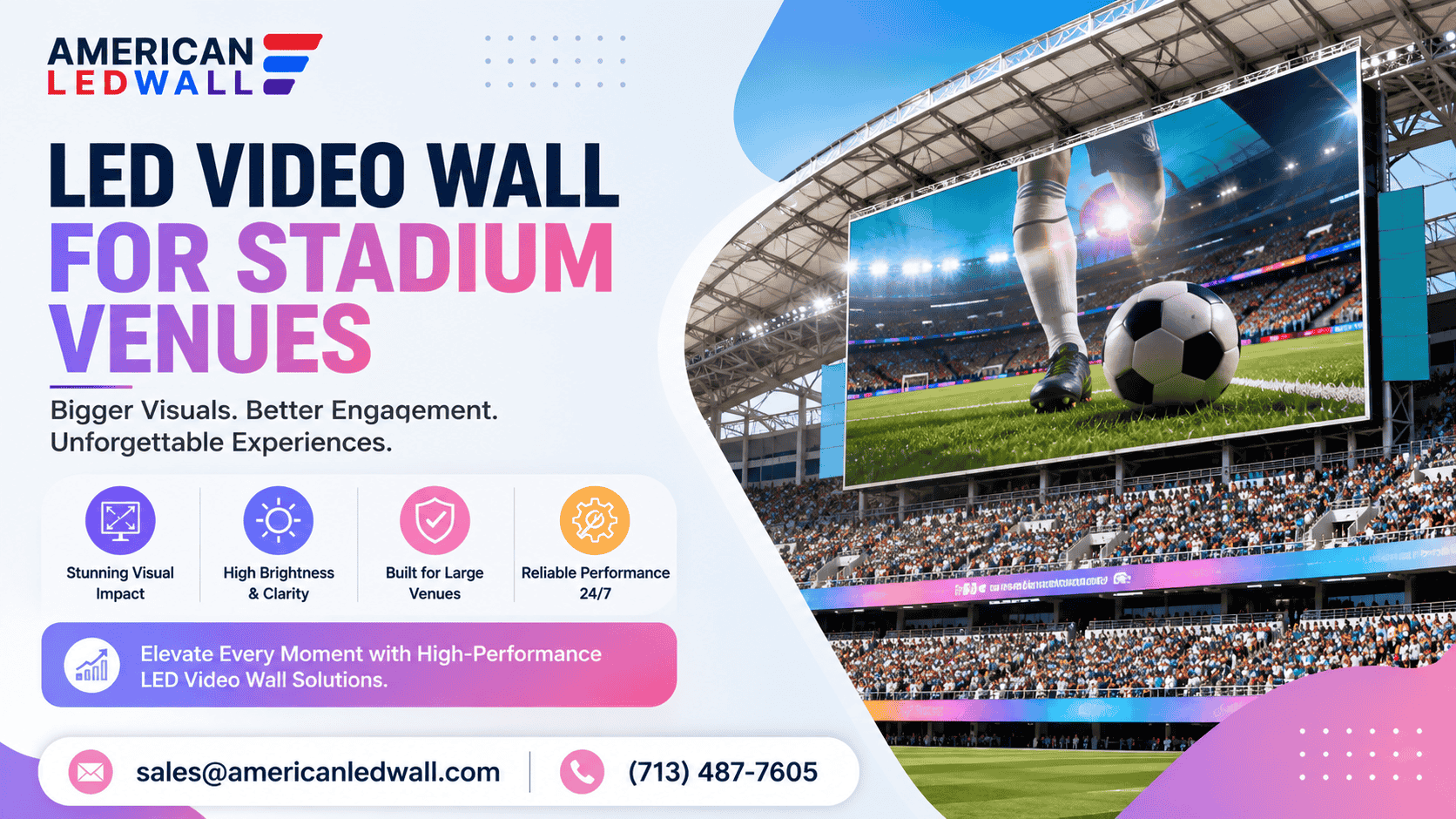
An LED video wall for stadium venues is the large screen that shows live action, replays, stats, and sponsor messages to the whole crowd, and it is the single biggest visual upgrade a field or arena can make. Ask most big scoreboard companies what one costs, though, and you get a quote form instead of a number.
This guide gives you the numbers. You will see what the different screens in a venue do, how size and cost scale from a high school field up to a pro stadium, what pixel pitch and brightness you actually need, and how sponsor revenue can pay the board back. We design and install these systems for US schools and venues, so the figures here come from real 2026 projects.
Here is the short answer up front. A stadium video board runs anywhere from about $100,000 for a modest high school field to several million for a large college or pro venue. Size and resolution drive most of that spread, and for many schools, sponsor advertising on the board covers a real slice of the bill.
The Screens That Make Up a Venue
A stadium is rarely one screen. Before you price anything, it helps to know the pieces, because most projects mix two or three of them.
The main videoboard, the one people call a jumbotron, is the big centerpiece that carries video, replays, and the score. It is the largest single cost. A ribbon board, or LED fascia, is the long, thin strip that wraps a facade or a balcony edge and runs sponsor messages and stats around the bowl. A scorer’s table display sits courtside or field-side and sells premium sponsor space right next to the action. Smaller venues often add an end-zone or corner board for a second angle, or a marquee out front to promote games and events to passing traffic. An LED video wall for stadiums and sports venues usually starts with the main board, then adds the others as budget and sponsor demand grow.
Start With Your Level: High School, College, or Pro
The fastest way to a realistic budget is to be honest about your level, because the jump between them is large.
High School Fields and Gyms
A high school field or gym usually wants one outdoor videoboard, often 12 to 30 feet wide, plus maybe a scorers’ table inside. Most land between $100,000 and $500,000 installed, depending on size and whether audio and a control setup come with it. This is the sweet spot for a stadium LED video wall funded partly by local sponsors.
College Venues
A college venue plays bigger. A main board, ribbon boards around the bowl, and a real control room push most projects into the $500,000 to $3 million range, and a large Division I stadium can run well past that.
Professional Stadiums
A professional venue is another world entirely, where a single center-hung or end-zone display can reach many millions on its own. If you are a school or a mid-size venue, the high school and small-college ranges are your map, and an outdoor LED video wall for stadiums at that level is very achievable.
How Big Should the Board Be
Size is not about impressing people. It is about the fan in the farthest seat being able to read it.
Installers borrow a rule from the sign world, one usually credited to the United States Sign Council: plan for about 1 inch of character height for every 10 feet of viewing distance, a legibility guideline that has held for decades. So a fan in the back row, 200 feet out, needs characters around 20 inches tall, and the board has to carry several lines of stats plus a clear video window at that height. In plain terms, a small high school field like that reads well on a board around 20 by 13 feet. A large college bowl with seats 500 feet out needs characters over four feet tall, which means a board several times larger. Measure the distance to your farthest seat before anything else, and size up from there.
Our screen-size calculator runs this math if you plug in the dimensions, so you are not guessing.
Pitch and Brightness for a Crowd Sitting Far Back
This is where stadiums save money, and where a lot of buyers overspend by copying indoor specs.
Pixel pitch is the gap between LEDs in millimeters, and a tighter pitch costs more. Indoors, close up, you want a fine pitch. But in a stadium, the nearest fan is usually dozens of feet away, and the rest are much farther, so a coarser pitch of 6 to 10 millimeters looks perfectly sharp and costs far less than a fine one. Paying for a 2 millimeter pitch on an outdoor field is money nobody in the stands will ever see. Someone searching for a high-technology stadium LED video wall often means this, but the truth is simpler: match the pitch to your seats, not to a spec sheet.
Brightness matters more than pitch outdoors. A field board fights direct afternoon sun, so it needs to run bright, usually 5,000 to 8,000 nits, to stay readable at kickoff. A good outdoor board also dims itself for night games, which protects the picture and cuts power. Indoors, an arena screen needs far fewer nits since it never battles the sun.
What an LED Video Wall for Stadium Use Costs
Pulling the pieces together, here is how the money tends to land for common projects, installed and turnkey.
Those are full-project figures, covering the screen, the structure, the processing, and the install. What moves your number within a range is size first, then pixel pitch, then whether you add audio, a control room, and multiple boards. A quality stadium LED video wall is not cheap, but the next section is the part that the big brands leave out: a lot of that cost can come back.
How the Board Pays for Itself
This is the math that gets a videoboard approved, and it is why “the board can pay for itself” is more than a slogan.
A video board creates sponsor inventory that a plain scoreboard never could. You can sell a rotating logo on the main board, a permanent panel on the scorers’ table, ribbon-board ads, and video spots during breaks. A high school that sells ten to twenty local sponsor packages at $2,000 to $8,000 each can bring in $40,000 to $100,000 a year. On a $250,000 board, that revenue covers the cost in three to six years, and every year after is money toward athletics. Colleges run this at a far larger scale through multi-year sponsor deals. The point is simple: a professional stadium LED video wall is more than an expense; it is a revenue tool, and that reframing is what turns a hard budget conversation into an easy one.
How a Texas High School Got Its Videoboard
Numbers make more sense with a real one. A 5A high school outside Dallas wanted a proper videoboard for its football stadium, replacing an old fixed-digit scoreboard that could not show replays or sponsor video.
They installed a 24 by 14 foot outdoor board at 10 millimeter pitch, running around 7,000 nits, so it stayed readable under Friday-evening sun, with a small control setup in the press box. The project came in at nearly $285,000 installed. To fund it, the booster club sold fifteen sponsor packages to local businesses, a car dealership, a bank, a couple of restaurants, and brought in about $52,000 in the first year through logo rotations and video spots. That revenue, plus a district contribution, put the board on a path to pay for itself in under six years. The lesson worth copying is not the screen size. It is that they lined up the sponsor revenue before they bought, so the board arrived with a funding plan already attached.
Picking a Supplier, and What the Overseas Listings Miss
Search this topic, and you will hit pages of listings for a stadium LED video wall factory, or an LED video wall stadium package sold by the square foot, most of them overseas. Cheap per-square-foot pricing looks tempting, so it is worth knowing what those numbers leave out.
Most low-cost stadium LED video wall manufacture happens in a few overseas plants, and the screen alone is only part of a working system. A US venue still needs structural engineering for wind load, a licensed install crew, a control room, content software, and someone to call when a module fails during a playoff game. That support is exactly what an overseas factory price does not include. When you compare top vendors for stadium LED video walls, weigh the whole package: a US-based partner who handles the structure, the install, the training, and the service, rather than only a high-quality stadium LED video wall shipped in a crate. For an odd-shaped bowl or a curved fascia run, that partner can also build a fully custom configuration that a stock overseas panel cannot match.
Getting It Installed and Running It on Game Day
The purchase is one thing. A board that actually works on Friday night depends on a few practicalities that rarely make the sales pitch.
Structure comes first, since a large board is a sail in the wind and needs an engineered mount or pole rated for your area. Power is next, often a new circuit or service upgrade at the field. Then there is content: someone has to run the board during the game, which means simple software and a volunteer or staffer trained on it before the season. Budget a little for graphics too, since a board full of clean sponsor spots and team intros earns far more than one showing plain text. A good installer sets all of this up and trains your people, so the first game is not a scramble. If you want to see the panel side of what goes into an outdoor build, the outdoor panels in our catalog show the weather-rated hardware these boards use, and our deeper look at video wall pricing breaks the per-square-foot costs down further.
Panels That Fit Stadium Work
If you are weighing hardware, here are three of our outdoor-ready series that suit venue work, from a sharper arena screen to a large board read from across a field. Tell us your venue and your farthest seat, and we will point you to the right fit.
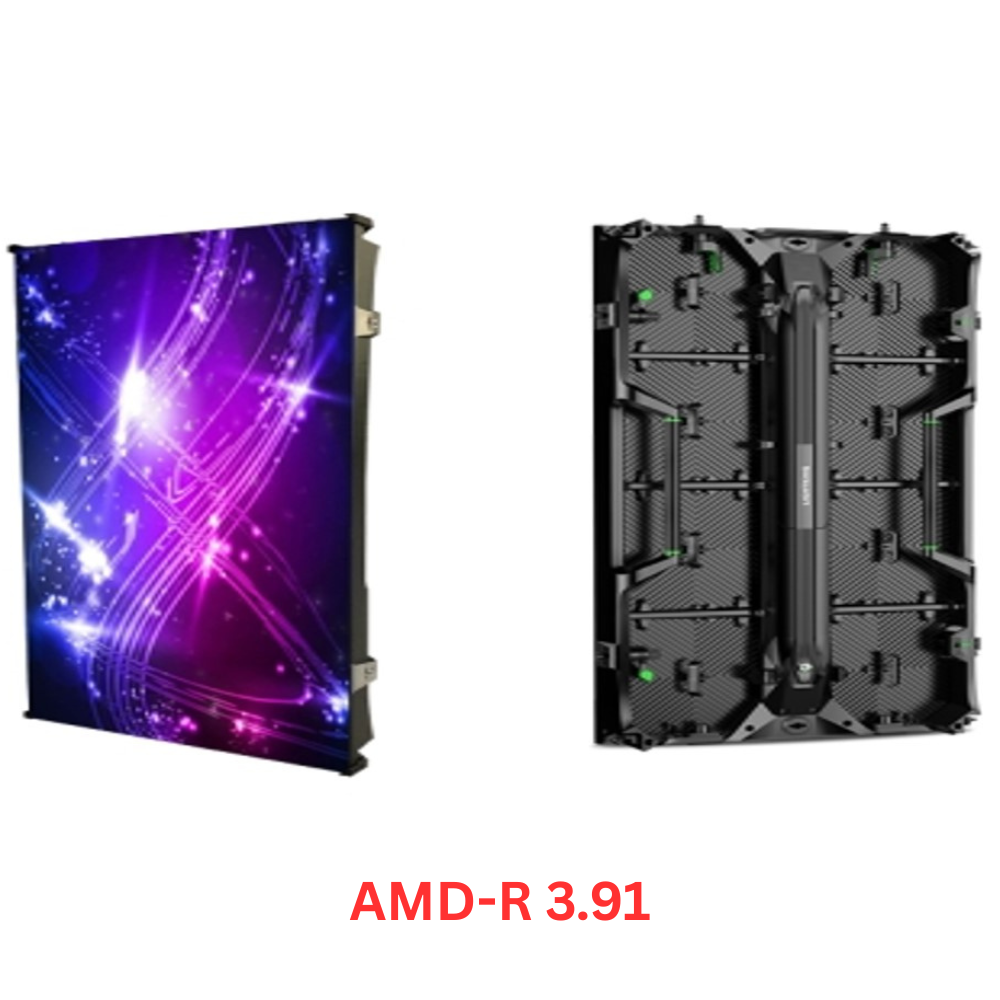
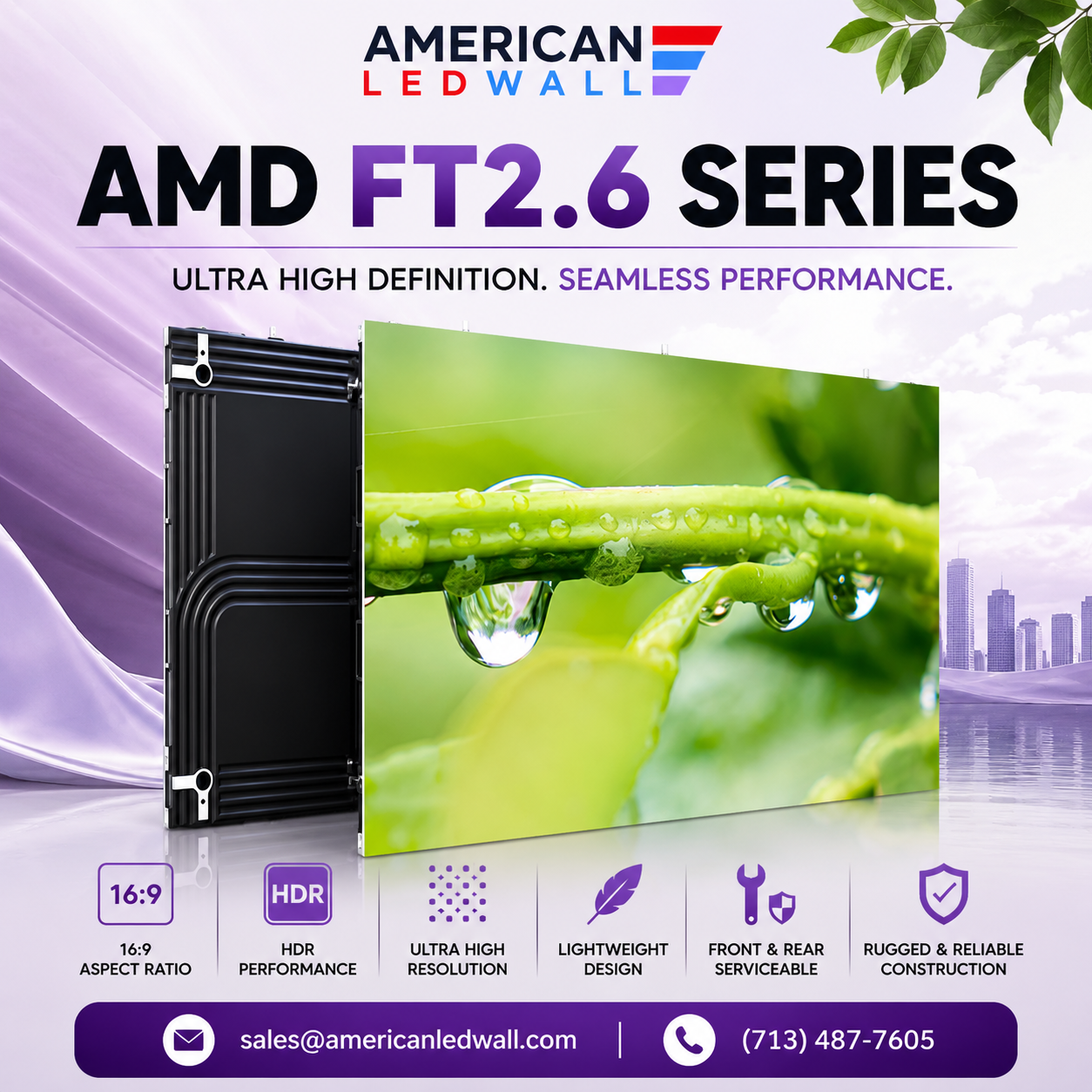
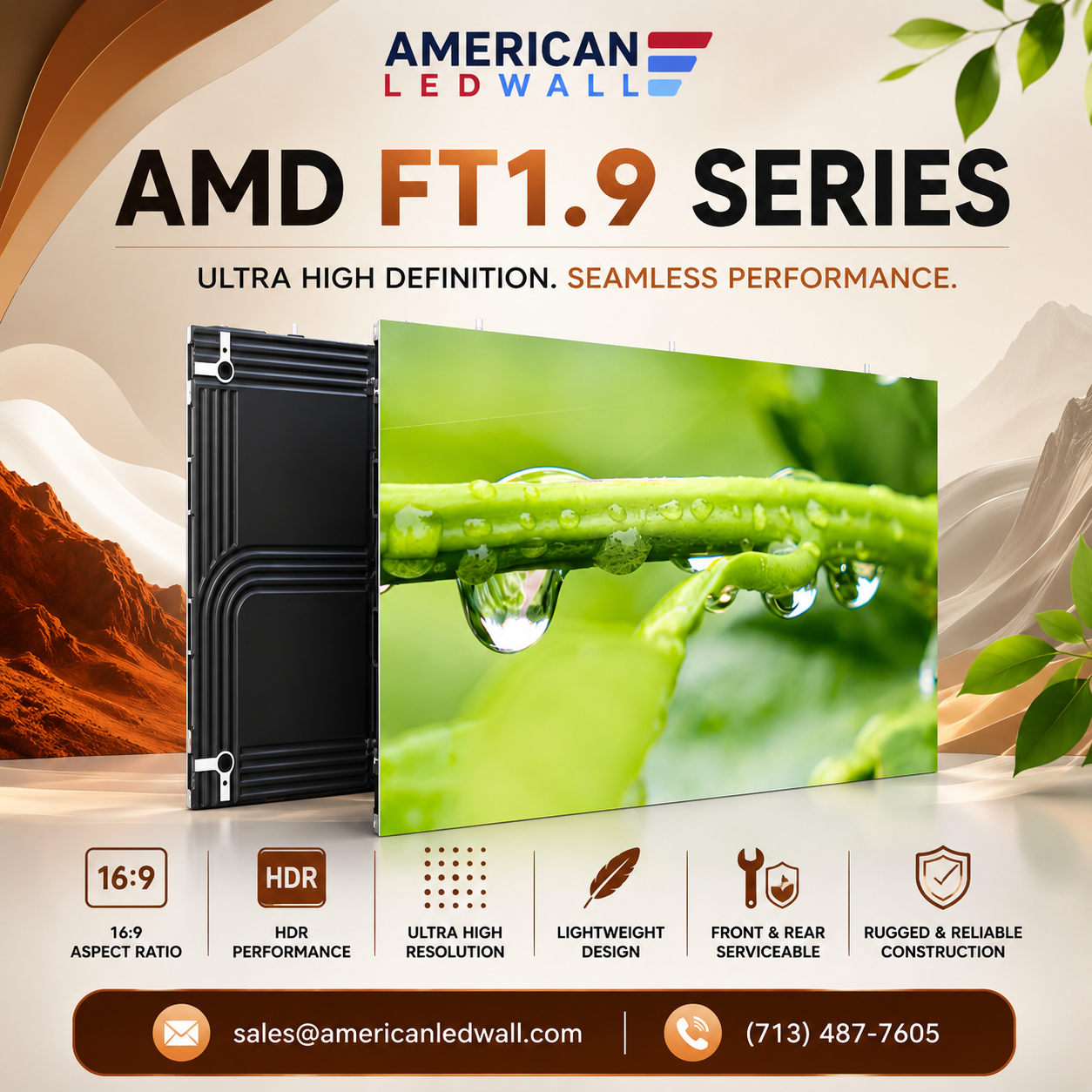
Larger boards sometimes call for a coarser pitch than a stock panel offers, so if your field is big and the seats are far back, ask us about a wider-pitch build sized for the distance.
Frequently Asked Questions
How much does an LED video wall for a stadium cost?
Most run $100,000 to $500,000 for a high school field and $500,000 to several million for a college or pro venue. Size and pixel pitch drive the price.
What size video board does a stadium need?
Size it from the farthest seat. A small high school field reads well around 20 by 13 feet, while large college bowls need several times that.
What pixel pitch is best for a stadium LED screen?
A coarse pitch of 6 to 10 millimeters is usually ideal outdoors, since fans sit far back. Fine pitch adds cost that nobody in the stands can see.
How do stadium video boards make money?
They create sponsor inventory. Selling logo rotations, scorers-table panels, and video spots can bring a school tens of thousands of dollars a year.
How long does a stadium LED video wall last?
A quality outdoor board runs about 100,000 hours, roughly a decade of seasons, before its brightness fades enough to consider a refresh.
