
Two businesses can order the same size LED billboard, mount them a block apart, and still end up paying prices that differ by six figures. That gap is exactly why LED billboard cost is so hard to pin to one number. The screen is a single line on the invoice. What you actually pay rides on the resolution you choose, whether the display faces a parking lot or a freeway, how the structure gets built, and what it costs to run once the power is on.
This guide lays out the real ranges a US business should plan for, using figures from actual outdoor LED projects instead of one headline price. You will see where every dollar lands, one project priced from start to finish, and a few costs that quietly stay off the quote until it is too late to plan for them.
LED Billboard Cost at a Glance
In 2026, most outdoor LED billboards in the US cost between $30,000 and $500,000 installed. A small storefront-scale display sits near the bottom, and a large, high-resolution highway board sits at the top. Size and resolution move the number more than anything else, which is why one flat figure never fits every project.
|
Screen size |
Typical setting | Screen only |
Installed (turnkey) |
|
10 x 20 ft |
Storefront, small business | $25,000 to $45,000 | $45,000 to $90,000 |
| 10 x 30 ft | Retail and commercial frontage | $40,000 to $70,000 |
$70,000 to $130,000 |
|
12 x 24 ft |
Mid-size roadside board | $50,000 to $90,000 | $95,000 to $170,000 |
| 14 x 48 ft | Standard highway bulletin | $120,000 to $250,000 |
$200,000 to $420,000 |
|
20 x 60 ft |
Large highway display | $300,000 to $500,000+ |
$450,000 to $800,000+ |
One quick note on the screen-only column. That is the display and nothing else. It is tempting to treat it as the budget, since it is the number most vendors quote first, but on a freestanding board, it usually covers less than half the finished job.
What Actually Sets the Price
Strip the topic down, and four things drive most of the spread between a cheap quote and an expensive one.
Resolution is the big one. LED screens are rated by pixel pitch, the gap in millimeters between one pixel and the next. Pack the pixels tight, and the picture stays sharp up close, which costs more. Space them out, and the image still looks clean from a distance, which costs less. A screen people read from 30 feet needs far more pixels than one they read from 300 feet at highway speed, so paying for fine resolution on a board nobody stands near is money you will not get back.
|
Pixel pitch |
Comfortable viewing distance |
Where it fits |
|
1.5 to 2.5 mm |
A few feet and up | Lobbies, control rooms, and close retail |
| 2.6 to 4 mm | Around 10 to 30 feet |
Indoor video walls, premium storefronts |
|
5 to 8 mm |
Around 30 to 80 feet | Street-level and storefront outdoor signs |
| 10 to 16 mm | 100 feet and beyond |
Highway boards and large-format displays |
Size is the obvious one. More square footage means more panels, more power, and a heavier structure to hold it up. Brightness matters too. An outdoor screen has to stay readable against direct sun, so it runs at several thousand nits and costs more per square foot than an indoor one that never fights daylight.
The last big lever is where the display goes. Bolt a screen flat onto an existing building wall, and you skip the pole, the foundation, and most of the crane work. Put that same screen on a freestanding structure by the road, the kind of build behind most large-format LED billboards, and you add a custom steel column, a deep concrete footing, and an electrical run. That is where budgets tend to double, and none of it has anything to do with the screen itself.
A Real Project, Priced Out
Numbers land better with a real example, so here is one we see often. A regional car dealership on a busy commercial road wants its own outdoor display, a 10 by 20 foot screen at roughly 8 mm pitch, single-sided, on a new pole near the street. It will run the dealership’s own promotions most of the day and rotate a couple of tenant ads. Here is roughly what that project costs.
|
Line item |
Estimate |
| LED screen, 10 x 20 ft, ~8 mm outdoor |
$30,000 to $45,000 |
|
Steel pole and concrete foundation |
$20,000 to $35,000 |
| Crane, rigging, and installation labor |
$8,000 to $15,000 |
|
Electrical service and trenching |
$5,000 to $12,000 |
| Permits and structural engineering |
$3,000 to $10,000 |
|
Content software setup |
$1,000 to $3,000 |
| Installed total |
$67,000 to $120,000 |
So the screen price the owner first saw online, that $30,000 to $45,000, came in under half the real bill. The structure and site work roughly matched the cost of the display. That split holds on nearly every freestanding board. Had the dealership chosen one of the wall-mounted outdoor LED displays instead, cutting the pole, the footing, and most of the crane time, the whole thing would have landed closer to $45,000 to $65,000.
The Running Costs After You Switch It On
The purchase is only the first half. An LED display draws power, needs a little upkeep, and runs on software, and those costs follow you for a decade.
Power is the main one. A rough way to estimate your monthly bill: take the screen’s running wattage, multiply by hours per day, then by 30, then by your electricity rate, and divide by 1,000. The dealership’s board pulls around 4 kW, running 12 hours a day at about 15 cents per kWh, costs roughly $215 a month. Bigger boards running longer can pass $800, and a large highway screen can top $1,500. Auto-dimming at night and running below full brightness cuts that a lot, which is worth asking about before you buy.
Upkeep is light but real. Outdoor LED screens are modular, so a failed tile, power supply, or receiving card gets swapped on its own instead of replacing the whole display. Set aside a small annual reserve for parts. A quality outdoor screen runs about 100,000 hours, roughly ten years, before the brightness fades enough to think about a refresh.
Then there is the software to schedule and change your content, usually a subscription in the $10 to $100 per screen per month range, plus a data connection and insurance.
Add it up over ten years, and you get the figure that actually matters. Take the dealership’s $67,000 to $120,000 install, add about $24,000 in power, roughly $5,000 in software, and a $10,000 maintenance reserve, and owning and running that board lands near $105,000 to $160,000 over the decade. That is close to $10,500 to $16,000 a year, all in. The sticker price alone never tells you that.
Should You Buy a Board or Rent Billboard Space?
People searching for billboard cost usually mean one of two very different things, and mixing them up is how a four-figure plan turns into a six-figure one.
Renting ad space on an existing board is an advertising buy, part of what the industry calls digital out-of-home, or DOOH. In the US, it runs about $1,500 to $30,000 for a four-week cycle, depending on the market and the traffic, with no structure to build, no permits to chase, and no maintenance to fund.
Owning your own display is a purchase, the kind of project priced out above. The real question is whether owning beats renting. Rough math: if you would otherwise spend $3,500 a month on rented space, that is $42,000 a year, so a $100,000 owned board pays for itself in under three years of avoided rent, and after that, the space is yours. That only works if the screen stays useful, though.
A board you fill with your own promotions every day earns its keep. Once you buy, hoping to sell ad time, it can sit half empty and take far longer to pay back. For most businesses we work with, a dealership, a church, a shopping center, owning wins because they are advertising themselves daily rather than hunting for ad tenants.
How to Read a Quote Without Overpaying
Two screens of the same size can differ two or three times in price, and the difference usually hides in parts you cannot see in a photo: the grade of the LEDs, the power supplies, the weatherproofing, the refresh rate, and whether spares and a real warranty are in the box. Cheaper is not always worse, but a quote far below the rest of the pack is worth a hard second look.
A complete quote should spell out:
- Pixel pitch and brightness in nits
- IP rating (an outdoor screen wants IP65 front and back)
- Refresh rate high enough for flicker-free video and on-camera footage
- Warranty length and what it actually covers
- Spare modules and power supplies are included in the price
- Freight and on-site commissioning, not left as “to be confirmed later”
A few red flags: no IP rating listed for an outdoor screen, a warranty under two years, and install or shipping left off the number entirely. One habit worth building: ask for the finished screen’s power draw in watts, then run the monthly estimate above yourself, so the running cost is not a surprise after the crane leaves.
Matching the Screen to Where It Lives
A lobby wall, a retail storefront, a school gym, a church roadside sign, a control room, and a hotel ballroom all get the same LED label, yet they need different builds. Close-up viewing calls for fine pixel pitch and indoor-rated panels. Street and highway viewing calls for tougher, brighter screens with wider pitch. Pick the viewing distance first, and the right resolution and budget tend to follow.
A corporate lobby or a control room reads best on fine-pitch indoor video walls, where text and dashboards stay sharp a few feet away. A storefront or a roadside sign needs a weather-rated build that handles sun and rain while staying clear of the curb.
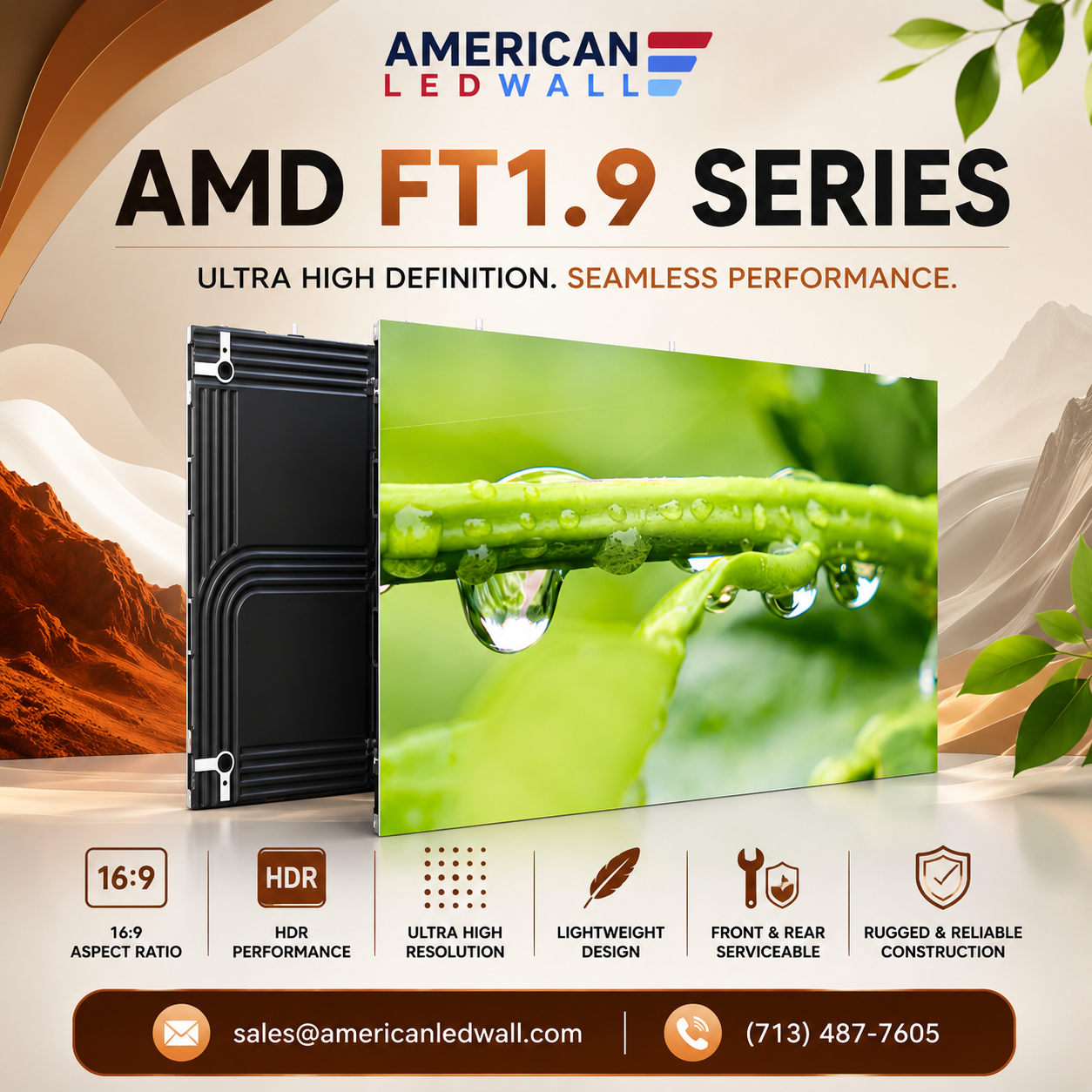
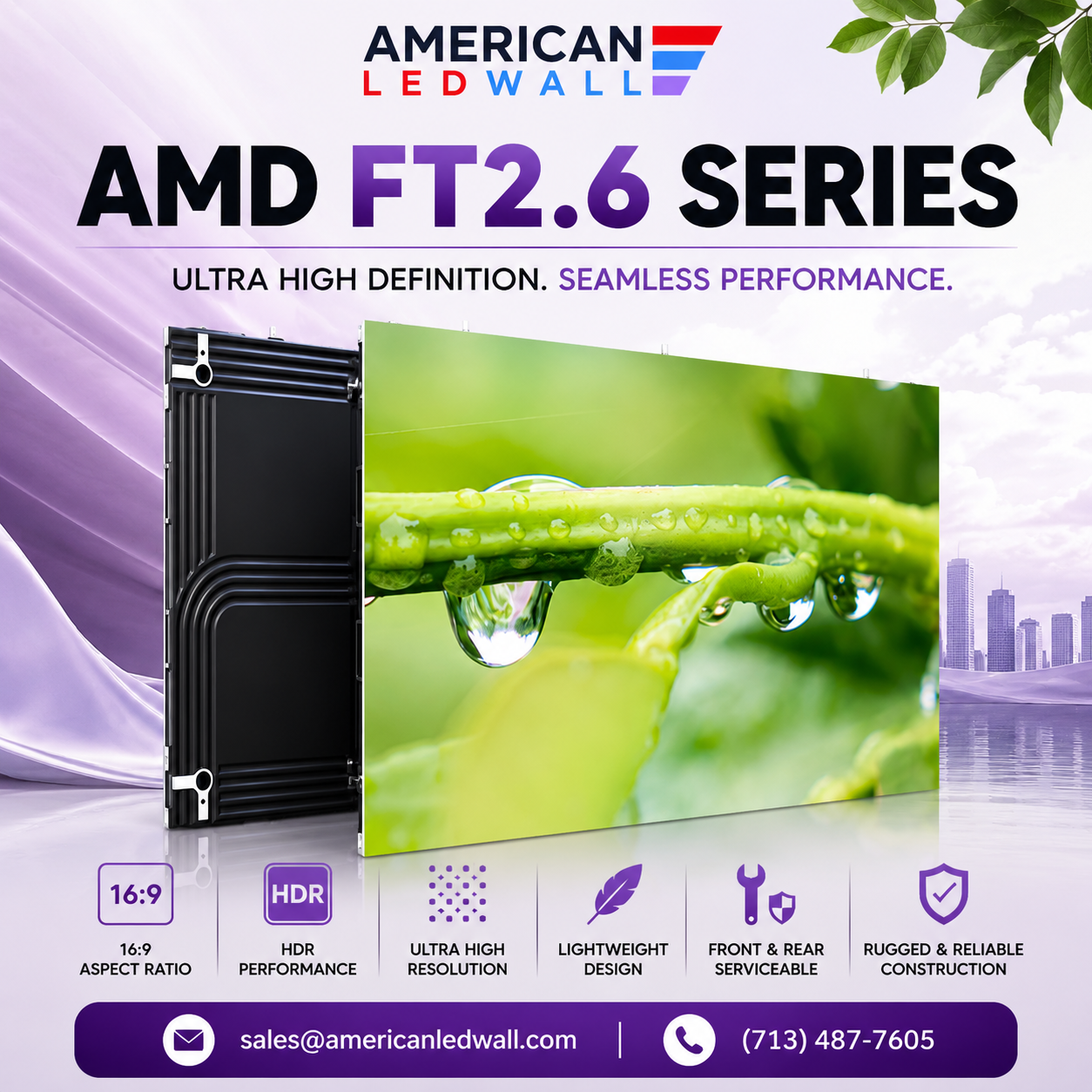
A few of our display series, and where each one fits:
FAQs
How much does an LED billboard cost?
Most outdoor LED billboards in the US cost between $30,000 and $500,000 installed. Size and resolution drive the number more than anything else. Small storefront-scale screens sit near the bottom, and large high-resolution highway boards sit at the top.
How much does it cost to build a digital billboard?
A freestanding digital billboard usually runs $65,000 to $400,000 or more once you add the steel structure, concrete foundation, electrical service, permits, and installation to the price of the screen.
How much does a digital billboard cost per month to run?
Power alone runs roughly $150 to $1,500 a month, depending on screen size, brightness, and hours of operation. Content software adds about $10 to $100 per screen per month, plus a data connection and insurance.
Is a digital LED billboard cheaper than a static one?
A digital LED billboard costs more upfront, but it skips reprinting and reinstalling for every new ad and can rotate many messages on one screen, so it often works out cheaper over a few years of use.
How much does it cost to install a digital billboard?
Installation alone, covering the crane, rigging, labor, and electrical work, typically adds $13,000 to $50,000 or more. Tall freestanding structures and hard-to-reach sites push it higher.
What is the cost of an LED billboard per square foot?
The screen hardware commonly runs a few hundred dollars per square foot, and it climbs with finer resolution and higher brightness. The structure and installation are separate costs on top of that.
How long does an LED billboard last?
A quality outdoor LED screen runs about 100,000 hours, roughly ten years, before the brightness fades enough to consider a refresh. Modules and power supplies are swapped as they wear out.
Do you need a permit to put up an LED billboard?
Usually yes. Many US cities and states regulate or cap digital signs, and local governments can ban them even where the state allows them, so permitting often decides a project before cost does. Scenic America outlines the state and local rules.
Ready for a Number for Your Own Site?
American LED Wall designs and builds LED displays in the United States and backs them with in-house support, so the team that quotes your screen is the same one that helps you run it.
