
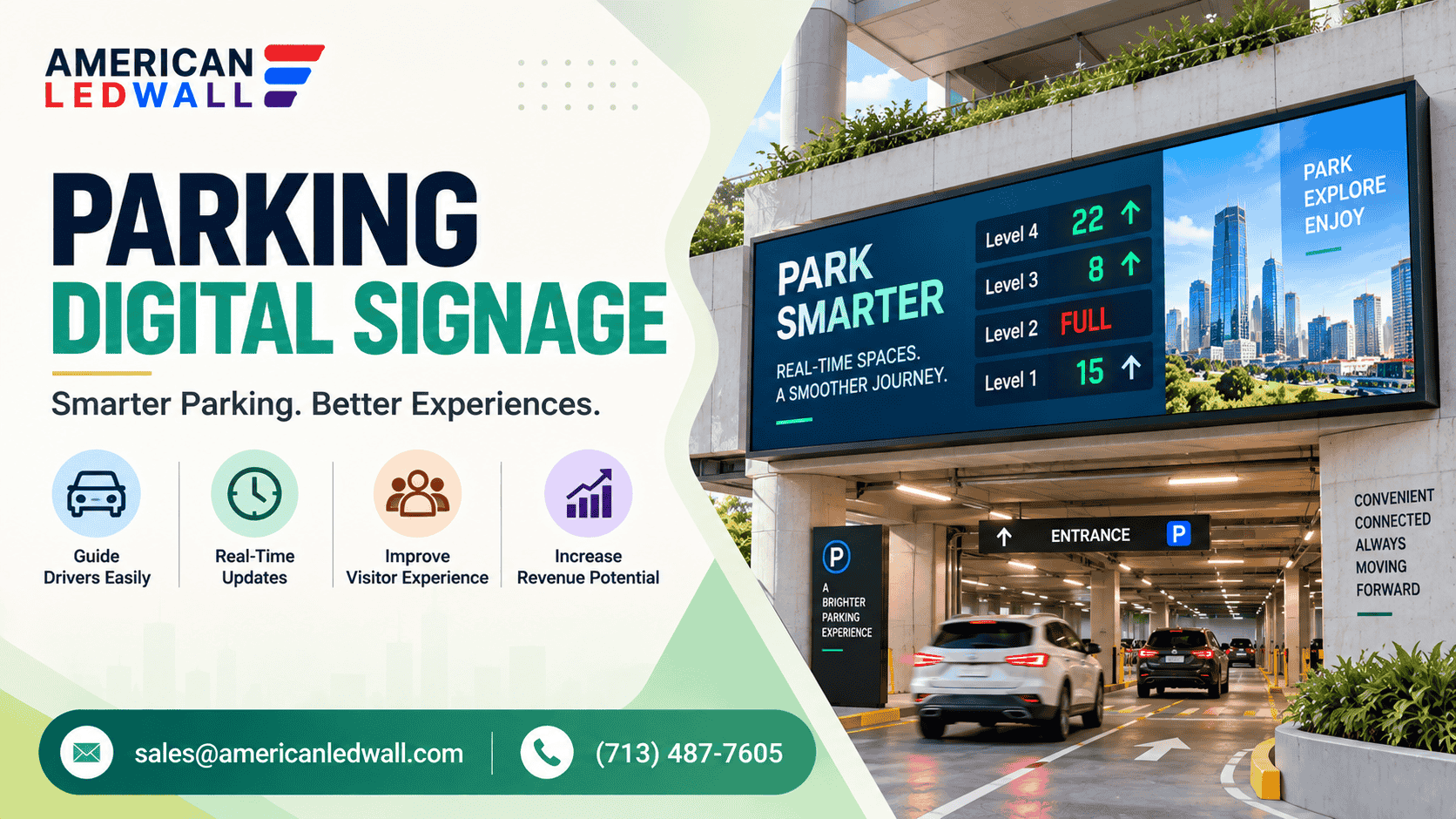
Parking digital signage is the set of screens that turns a stressful hunt for a space into a short, guided drive. Think of the full-or-open sign at the entrance, the counters on each level, the arrows that point to the next free spot, and the big display on the front of the garage that sells space to advertisers. The hunt is a real cost. Parking search is a documented contributor to downtown congestion.
UCLA transportation research reviewing studies of busy districts found that a wide but often large share of cars on the road were circling for a space, from under a tenth to well over half, depending on the area. Signs that point drivers to an open spot cut that circles at the source. Most guides explain the idea and stop there.
This one gets specific about the actual signs you buy, what they cost, how bright they need to be to survive a sun-baked deck, and how the screen on the facade can quietly pay for the whole system. It is written from the display side, so it is honest about which pieces are screens, which we supply, and which belong to a sensor-and-software partner.
A quick answer before the details. A single entrance count sign might run a few thousand dollars. A full multi-level guidance setup with wayfinding and rate signs can reach the low six figures. And a large facade advertising display is a separate investment, one that can earn its cost back through ad sales.
The Signs You Actually Install
Most articles list features. It is more useful to know the physical signs, because each one goes in a specific place and does one job.
An entrance count sign greets drivers at the gate with a simple message: how many spaces are open, or just FULL in red. Per-level counters sit at each floor of a garage so a driver knows whether to keep climbing. In-aisle indicators, the little red and green lights over individual bays, point to open spots row by row. Directional wayfinding screens guide drivers through turns to the nearest open zone.
Variable-rate signs show the current price and change it by the hour or by demand. EV-status signs show which chargers are free. And the facade display, the large screen on the outside of the structure, promotes the garage and carries paid advertising. A complete set of parking digital signage boards usually mixes several of these, not all at once, and rarely the same combination twice. Whether people call it parking garage digital signage inside a structure or parking lot digital signage out on an open lot, the sign types are the same building blocks.
How the Count Actually Happens
The signs are only half the system, and this is where a display company should be straight with you. A count sign is useless without something feeding it a number.
That number comes from a sensor layer. Older setups use an ultrasonic sensor over each bay that reads whether a car is present. Newer ones use cameras that watch a whole row or read license plates on the way in and out. Either way, the data flows to a parking guidance system, the software that tallies occupancy and pushes counts to every sign in real time. That software, plus the sensors, is what a specialist supplies.
An automated parking guidance system ties it together so the numbers update without anyone lifting a finger, and for an open lot rather than a covered garage, an outdoor parking guidance system uses weather-sealed sensors and signs built for the elements. We build and install the display side. The sensing and the parking management software behind it come from a guidance partner, and knowing that split keeps your quotes clean.
Hardware That Survives a Parking Deck
A screen on a parking structure lives a harder life than one in a lobby, and the specs that matter are different.
Brightness comes first. An entrance sign facing the afternoon sun needs to run bright, usually 5,000 to 7,000 nits, or it washes out just when a driver needs to read it. Weatherproofing is next: open-air decks see rain, road salt, and temperature swings, so the sign wants an IP-rated sealed cabinet, not an indoor panel in a box. Reading distance sets the pixel pitch.
A facade display read from across a street can use a coarse pitch and cost less, while a rate sign read from a few feet away at the gate wants a finer one. For the outdoor entrance and facade work, the weather-rated panels we build are made for exactly this, and for a curved or wrapped structure, a screen shaped to the building fits where a flat panel cannot.
Matching the Signs to Your Facility
Scope and budget swing hard with the kind of facility, so place yourself before pricing.
A small surface lot often needs just one entrance count sign and maybe a rate sign, an easy, low-cost start. A multi-level garage is the classic case for full digital signage parking garage coverage: an entrance sign, per-level counters, in-aisle indicators, and wayfinding. A mixed-use or retail deck adds a facade, advertising display, and promotional messaging to pull in shoppers.
A hospital campus is one of the highest-value settings, since stressed visitors need clear direction most, and digital signage hospital parking garage projects usually combine guidance signs with wayfinding to the right entrance. A municipal system ties many garages together across a city. If you run a small lot or a single garage, the city-wide systems you read about are not your benchmark.
What Parking Digital Signage Costs
Nobody in the top results will name a number, so here is an honest frame, keeping in mind the sensors and software sit alongside the signs.
| Facility and scope | Typical signs | Rough display budget |
| Small surface lot | One entrance count sign, a rate sign | $3,000 to $15,000 |
| Multi-level garage | Entrance sign, level counters, wayfinding | $30,000 to $150,000 |
| Mixed-use or retail deck | Above, plus a facade advertising display | $60,000 to $300,000 |
| Municipal, multi-garage | City-wide signs and integration | Several hundred thousand and up |
Within any range, the cost of digital parking signage is driven by the number of signs, how many are large-format LED, and whether you add a facade display. The signs are a one-time hardware cost. The sensor system and the parking management software usually carry an ongoing fee, which the numbers above do not include. Because a garage facade is essentially an outdoor advertising screen, our breakdown of outdoor screen pricing applies the per-square-foot math to that piece.
The Facade That Pays for the System
Here is the part that the other guides mention in a single line and then drop, and it is the most valuable idea in this whole topic. The large display on the outside of a garage is more than a sign. It is advertising space.
A garage on a busy street reaches thousands of drivers and pedestrians a day, which makes its facade valuable to advertisers, much like a roadside billboard. Sell that space to local brands, and the ad revenue can offset a real share of the guidance system, sometimes covering it entirely over a few years. Because the economics mirror a billboard, the same rules apply: brightness to beat daylight, coarse pitch for distance viewing, and content that changes on a schedule.
If you want to see how that plays out in dollars, we priced a roadside billboard from screen to structure in a separate guide, and a facade display follows the same logic. Treated this way, the sign out front stops being a cost and starts being a line of income.
A Real Example: A Downtown Mixed-Use Garage
Numbers make more sense with a real one. Picture a six-level garage under a downtown retail and office building, where drivers used to circle for a spot and often gave up and parked on the street.
The operator added an entrance count sign, per-level counters, and simple wayfinding inside, then put a large LED display on the street-facing facade. The guidance signs and their sensors were handled by a parking-technology firm, while the display hardware, including the facade screen, came in around $95,000.
Within the first year, the facade screen was selling ad slots to a nearby restaurant, a gym, and the retail tenants in the building above, and that ad income was covering a meaningful part of the yearly system cost. The move that mattered was not the sign count. It was treating the facade as an advertising asset from day one, so the most expensive screen also became the one that paid.
Where We Fit, and Where a Guidance Partner Does
Straight talk, since this trips up first-time buyers. Parking digital signage comes from two kinds of companies, and knowing which does what saves money.
We supply the display hardware, the entrance signs, wayfinding screens, rate signs, and the large facade advertising displays, plus the design and installation of those screens. What we do not sell is the bay sensor network, the count software, or the parking management software that runs occupancy and payments. On a real project, the two work together: the guidance partner counts the spaces and feeds the data, and our screens show it.
If you are pricing digital parking signage, sort your project into those two buckets early, and both quotes will be cleaner for it. The same goes for enter and exit signs for parking lot access, which pair with the gate and payment system a specialist installs. Ready-made extras like a parking digital signage template for your content, or a parking digital signage app for managing it from a phone, also live on that software side, not in the display hardware.
Parking-Ready Panels We Build
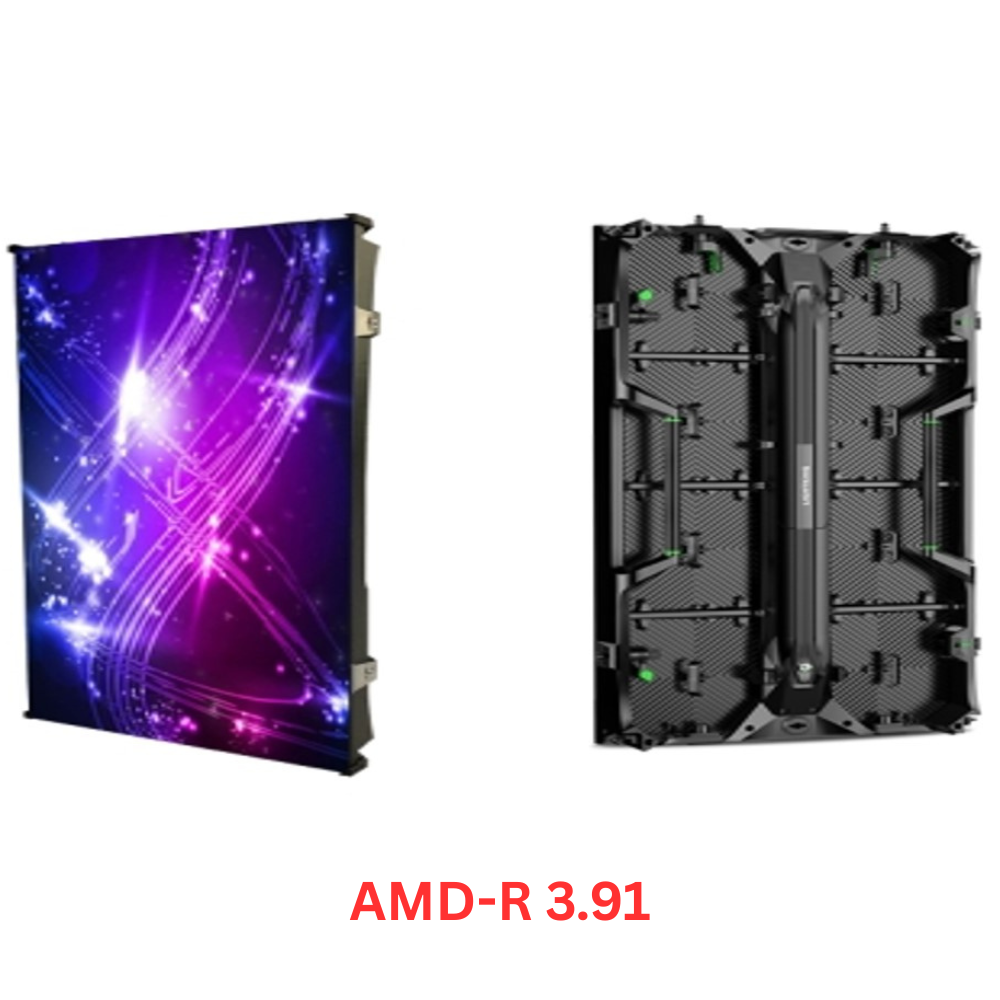
If you are weighing the display side, here are three of our outdoor-capable series that suit parking work, from a bright entrance sign to a large facade display. Tell us the spot and the reading distance, and we will point you to the right one.


For an indoor pay station lobby or an office-tower entrance screen tied to the garage, our indoor display range covers the close-viewing panels.
Frequently Asked Questions
What is parking digital signage?
It is the network of screens that guides drivers and runs a parking facility, from entrance count signs and level counters to wayfinding, rate signs, and a facade advertising display.
How much does parking digital signage cost?
Display hardware runs roughly $3,000 for a single entrance sign to the low six figures for a full multi-level garage. Sensors and software are added on top.
How do the signs know how many spaces are open?
Bay sensors or cameras detect occupancy and feed a guidance system, which tallies the count and pushes it to every sign in real time.
Can a parking garage make money from its signs?
Yes. A large display on the facade can sell advertising to local brands, much like a billboard, and the revenue can offset the cost of the whole system.
Do you supply the sensors and parking software too?
No. We supply and install the LED display hardware. The bay sensors and parking management software come from a guidance-system specialist.
Ready to Get Started
Done well, parking digital signage clears congestion, guides drivers straight to a space, and, through the display on the facade, helps pay for itself. Get the screens right, bright enough for the sun and sealed for the weather, and they will run for years. When you are ready to plan the entrance signs, wayfinding, and facade display for your lot or garage, our team can size them and give you a straight, itemized price.
