
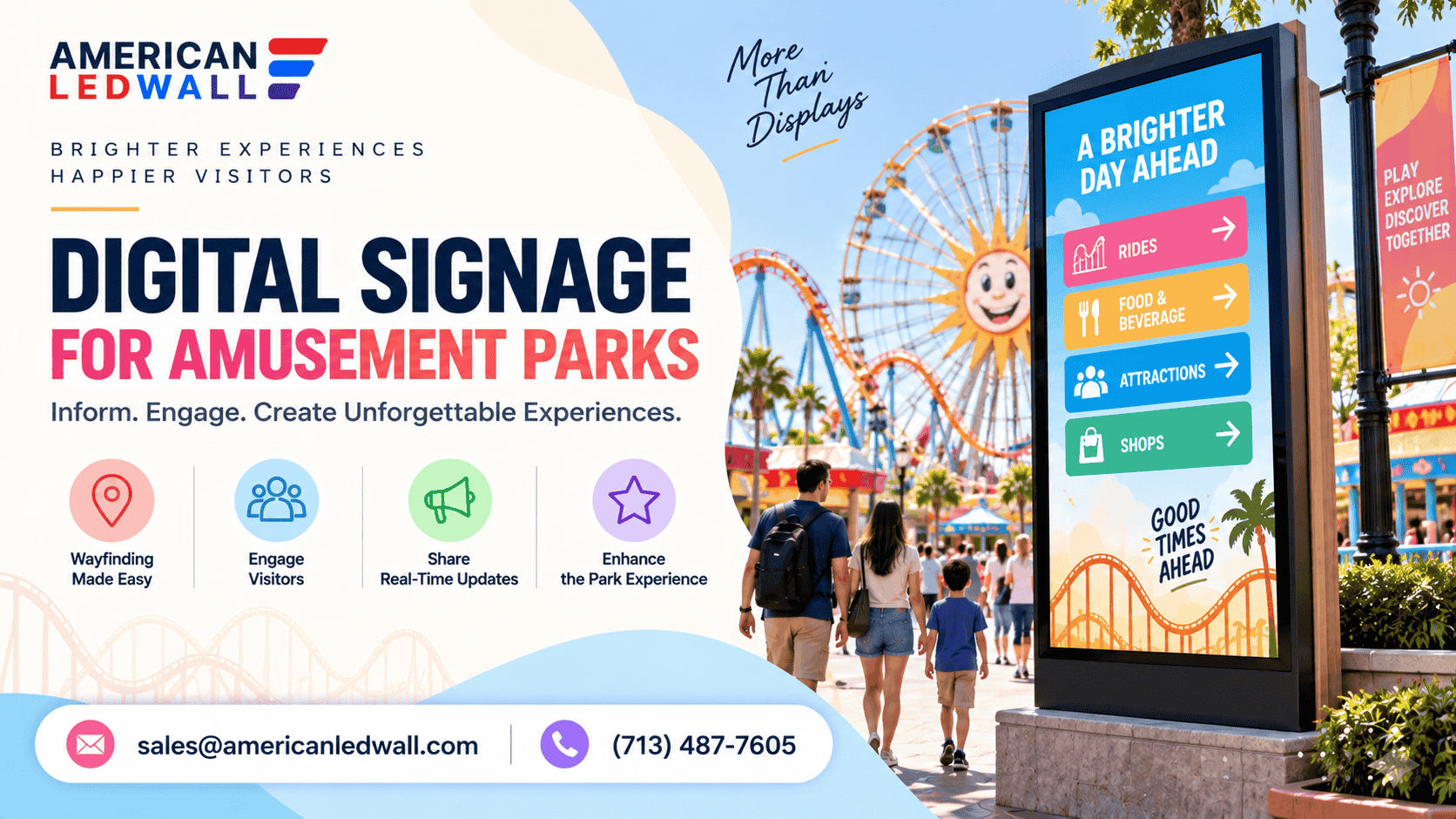
Digital signage for amusement parks lives the hardest life a screen can face. It bakes in July sun, takes rain and the spray off a log flume, collects dust and sunscreen fingerprints, and runs open to dawn for a whole season without a day off. A panel that looks brilliant in a mall lobby can turn into a black rectangle by August out here. So this guide starts where the others do not, with the durability that decides whether a screen lasts one summer or ten.
From there, it covers the actual displays a park uses, what they cost, and where the wait-time and content software behind them comes from. It is written from the display side, so it is straight about which parts are screens, which we build, and which belong to a software partner.
A quick answer before the details: park signage ranges from a few thousand dollars for a single outdoor menu board to hundreds of thousands for an entrance spectacular and a full set of wait-time and wayfinding screens. What moves the number most is how many screens are large-format LED and how rugged they need to be for their spot in the park.
The Screens Guests Actually See
A park runs dozens of screens, each doing one job in one place. Knowing the pieces makes budgeting far easier.
The entrance is spectacular, with the giant LED display that greets guests and sets the mood, often the single biggest screen in the park. Wait-time boards show ride queue lengths so guests can plan their day. Wayfinding screens carry interactive maps that help people find the next coaster or the nearest restroom. Ride and height signs post requirements and safety rules at each attraction. Show and parade schedules keep the whole park on the same clock.
Digital menu boards at food stands swap breakfast for lunch and push hot drinks on a cold morning. Queue-entertainment screens run trivia and video to make a long line feel shorter. And safety and emergency messaging can take over every screen at once for a lost child or an evacuation. Amusement park digital signage usually blends a handful of these, sized and toughened for where each one lives.
The Thing That Decides Everything: Surviving Outdoors
Here is what the other guides skip and what actually keeps a park screen alive. A display outdoors at a park faces four enemies, and the specs that beat them are the specs that matter.
The sun comes first. A screen facing open sky needs to run very bright, usually 5,000 to 8,000 nits, or it washes out to gray at noon, exactly when the park is busiest. Water is next, and it is unique to this setting. Rain, humidity, and the splash zone around water rides mean a screen needs a sealed, IP-rated cabinet, ideally IP65 or better on both faces.
Under the IEC 60529 standard, IP65 means the cabinet is fully dust-tight and shrugs off water jets from any direction, which covers rain and splash but not full immersion. An indoor panel someone hoped would be fine does not come close. Temperature matters more than people expect, since a seasonal park swings from freezing spring mornings to blazing afternoons, so the display has to hold a wide operating range.
And abuse is real: guests lean on screens, kids bang them, and dust and sunscreen coat them, so a park display wants tough glass or a hardened surface and easy cleaning. Get these four right, and a screen runs for years. Miss one and it dies mid-season, usually on the hottest, busiest weekend.
LED or a Protected LCD
This is the choice nobody else will lay out plainly, because some of them sell the enclosure. Both paths can work outdoors, and the right one depends on the job.
An LCD panel can survive outside, but it usually needs an aftermarket weatherproof enclosure with its own cooling and anti-glare glass to do it, which adds cost and bulk. A direct-view LED display, on the other hand, is built rugged from the start. The sealed cabinet is the weatherproofing; it runs far brighter in the sun, and it scales to any size for a big entrance wall with no seams.
The simple rule: for a large, bright, seen-from-far surface like an entrance spectacular or a wait-time board across a plaza, an LED display wins on brightness, size, and native durability. For a small, close-up interactive screen, a protected LCD can be the cheaper fit. For the outdoor entrance and board work, the weather-sealed panels in our lineup are made for exactly this punishment, and for a curved archway or a themed structure, a screen shaped to the build fits where a flat panel cannot.
How Wait-Time Screens Actually Work
Wait-time boards are the signature park screen, and it is worth knowing what makes the number appear, since a display company should be honest about this. The screen is the easy part. The wait time comes from somewhere else.
Some parks still have a ride attendant set the posted time by hand from a tablet. More advanced parks calculate it automatically, using scanners at the queue entrance, camera counts, or data from the park app, and push the number to every board in real time. That calculation and the app behind it are a queue-management system, which a specialist provides, not the display maker.
The screens show the number, and the software works it out. One caution worth passing on: an inaccurate wait time hurts more than no wait time, so parks that post waits should invest in getting them right. We supply and mount the boards. The wait-time engine and the content system come from a software partner.
Matching the Plan to Your Park
Scope and budget swing hard with the kind of park, so place yourself before pricing.
A family fun center or a small park often needs just a few outdoor menu boards and one feature screen at the entrance, an easy, low-cost start. A regional amusement park is the classic full build: an entrance spectacular, wait-time boards at the major rides, wayfinding, and digital menus across the midway. A major theme park runs hundreds of screens with custom-themed media, multiple large LED displays, and a full team.
And a water park raises the durability bar higher than anywhere, since nearly every screen sits in constant humidity and splash, so sealing and corrosion resistance lead every decision. If you run a small or regional park, the flagship installations you read about are not your benchmark.
What Digital Signage for Amusement Parks Costs
Nobody in the top results will name a number, so here is an honest frame, keeping in mind the wait-time software and content system sits alongside the screens.
| Park size | Typical scope | Rough display budget |
| Family fun center | A few outdoor menu boards, one feature screen | $10,000 to $60,000 |
| Regional amusement park | Entrance display, wait-time boards, wayfinding, menus | $60,000 to $400,000 |
| Major theme park | Hundreds of screens, several large LED displays, themed media | Well into the millions |
| Water park | Above, plus higher sealing throughout | Varies with sealing and size |
Within any range, the number is driven by how many screens are large-format LED, how rugged they need to be, and whether you add a big entrance display. The screens are a one-time cost. The queue software and content management usually carry an ongoing fee, which the numbers above do not include. Because an entrance display is really a large outdoor screen, our outdoor screen cost breakdown works through the per-square-foot math for that piece.
The Entrance Display That Pays Its Way
Here is an angle that the other guides drop in a line, and it is worth more thought. The giant screen at the front of a park is more than welcome. It is prime advertising real estate.
An entrance spectacular is seen by every guest who walks in, tens of thousands on a busy day, which makes it valuable to sponsors, much like a stadium board or a roadside billboard. Sell slots to a soda brand, a nearby hotel, or a film tie-in, and the ad revenue can offset the cost of the display and then some.
Because the economics mirror outdoor advertising, the same rules apply: brightness to win against daylight, a pitch matched to how far guests stand, and content on a schedule. We walked through those numbers on a roadside board in our billboard pricing guide, and an entrance display follows the same logic. Treated this way, the biggest screen in the park can also be the one that pays for itself.
A Real Example: A Regional Park Refresh
Numbers make more sense with a real one. Picture a regional amusement park that still ran faded static signs, hand-written wait-time boards, and printed menus that curled in the humidity.
The park put a large LED display over the main entrance, added wait-time boards at its six headline rides, installed weather-sealed digital menu boards across the food stands, and set up wayfinding near the front gate. The display hardware, including the entrance screen, came in around $180,000, while the wait-time system and content software were handled by a queue-management vendor the park brought in.
Within the first season, the entrance display was carrying paid spots from a regional soda bottler and a nearby resort, and that ad income was covering a real share of the yearly cost. The move that mattered was not the screen count. It was speccing every outdoor screen for full sun and splash from the start, so nothing failed when the July crowds and afternoon storms arrived together.
Where We Fit, and Where a Software Partner Does
Straight talk, since this trips up first-time buyers. Digital signage in amusement parks comes from two kinds of companies, and knowing which does what saves money.
We supply the display hardware, the entrance LED walls, wait-time and wayfinding boards, and outdoor menu screens, plus the design and installation of those displays. What we do not sell is the queue-management system that calculates wait times, or the content platform that schedules what plays across the park.
In a real project, the two work together: the software partner runs the wait data and scheduling, and our screens carry it out. Truly intelligent amusement park digital signage is that pairing, rugged displays plus smart software, working as one. Sort your project into those two buckets early, and both your quotes will be cleaner for it.
Park-Ready Panels We Build
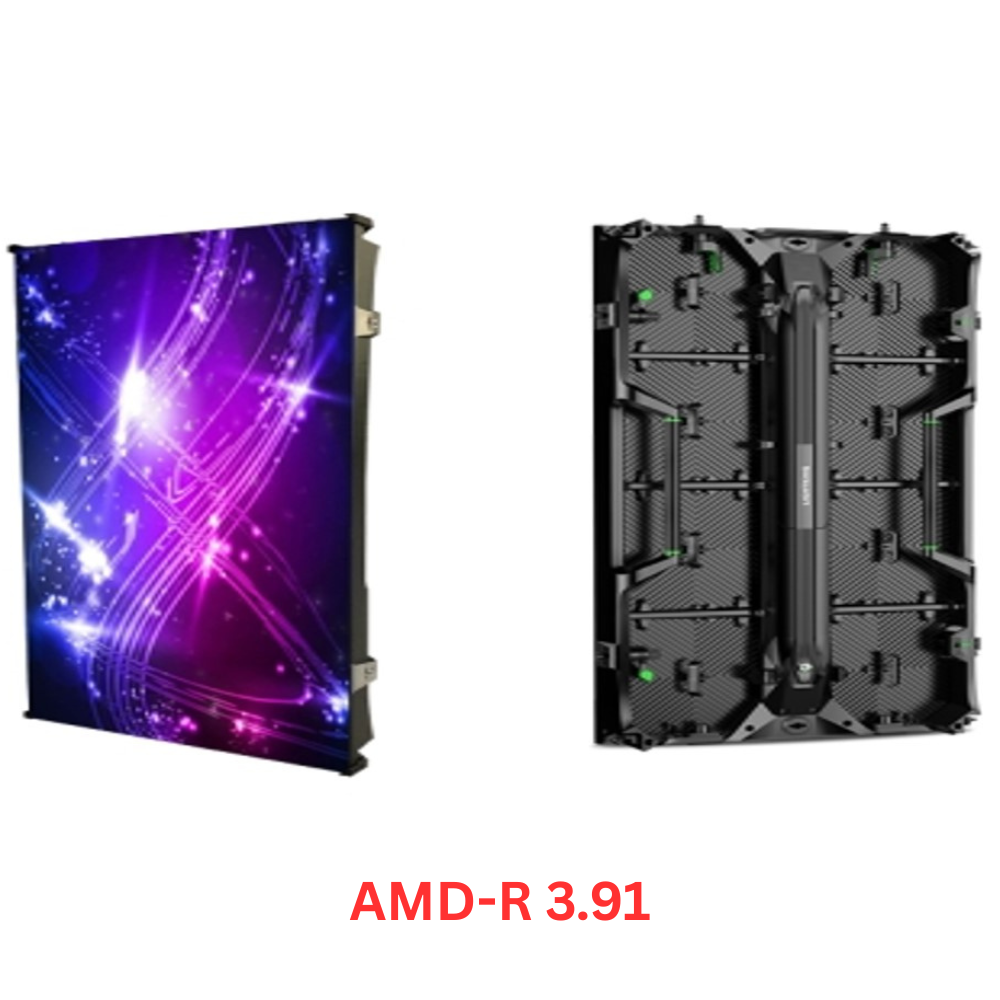
If you are weighing the display side, here are three of our outdoor-capable series that suit park work, from a bright menu or wait-time board to a large entrance display. Tell us the spot and how far guests stand, and we will point you to the right one.


For an indoor arcade, a ticketing hall, or a themed restaurant inside the park, our indoor display range covers the close-viewing panels that never fight the weather.
Frequently Asked Questions
What is digital signage for amusement parks?
It is the network of screens across a park, from the entrance display and wait-time boards to wayfinding, digital menus, and safety messaging, that informs and entertains guests.
How much does amusement park digital signage cost?
Display hardware runs roughly $10,000 for a small park to well into the millions for a major theme park. Wait-time and content software are added on top.
What makes an outdoor park screen last?
High brightness for sun, a sealed IP65-rated cabinet for rain and splash, a wide temperature range for the season, and a tough surface for guest contact.
Is LED or LCD better for a theme park?
For large, bright, outdoor screens like an entrance display, LED wins on brightness, size, and native weatherproofing. A protected LCD can suit small close-up screens.
Do you supply the wait-time software, too?
No. We supply and install the LED display hardware. The wait-time engine and content platform come from a queue-management and signage-software partner.
Ready to Get Started
Done right, digital signage for amusement parks guides guests, cuts the sting of long lines, sells the next snack, and, through the display at the gate, helps pay for itself. Get the screens right, bright and sealed for a full season outdoors, and they will run for years of summers. When you are ready to plan the entrance display, wait-time boards, and menus for your park, our team can size them and give you a straight, itemized price.
