
Buying a display for a military program is not like buying one for a conference room. The wrong choice does not just look bad in a meeting. It can fail a compliance review, stall a contract, or quit in the field when it matters most. So the company you buy from matters as much as the panel it ships.
A military LED display supplier is a company that builds or provides LED displays for defense use and can prove the product meets federal rules and military demands. This guide is for the program managers, integrators, and contracting officers choosing one, so it covers what military-grade actually means, the two kinds of military LED displays, how to vet a supplier, and where these displays end up across the services.
What Military-Grade Actually Means
Military-grade is not a sticker. It is a set of things you can check. On the environmental side, a true military display is tested against standards like MIL-STD-810 for shock, vibration, dust, and temperature, and MIL-STD-461 for electromagnetic interference, so it keeps working where a commercial screen would quit. On the sourcing side, it has to clear the federal origin rules, which we come to below. And on the practical side, it ships with real documentation, long-term parts support, and a build that survives years of hard use rather than a military label on an ordinary screen. A supplier that cannot speak to all three is selling a commercial display dressed up for the part.
The Two Kinds of Military LED Displays
The phrase LED display covers two very different products in a defense setting, and mixing them up wastes time on both sides.
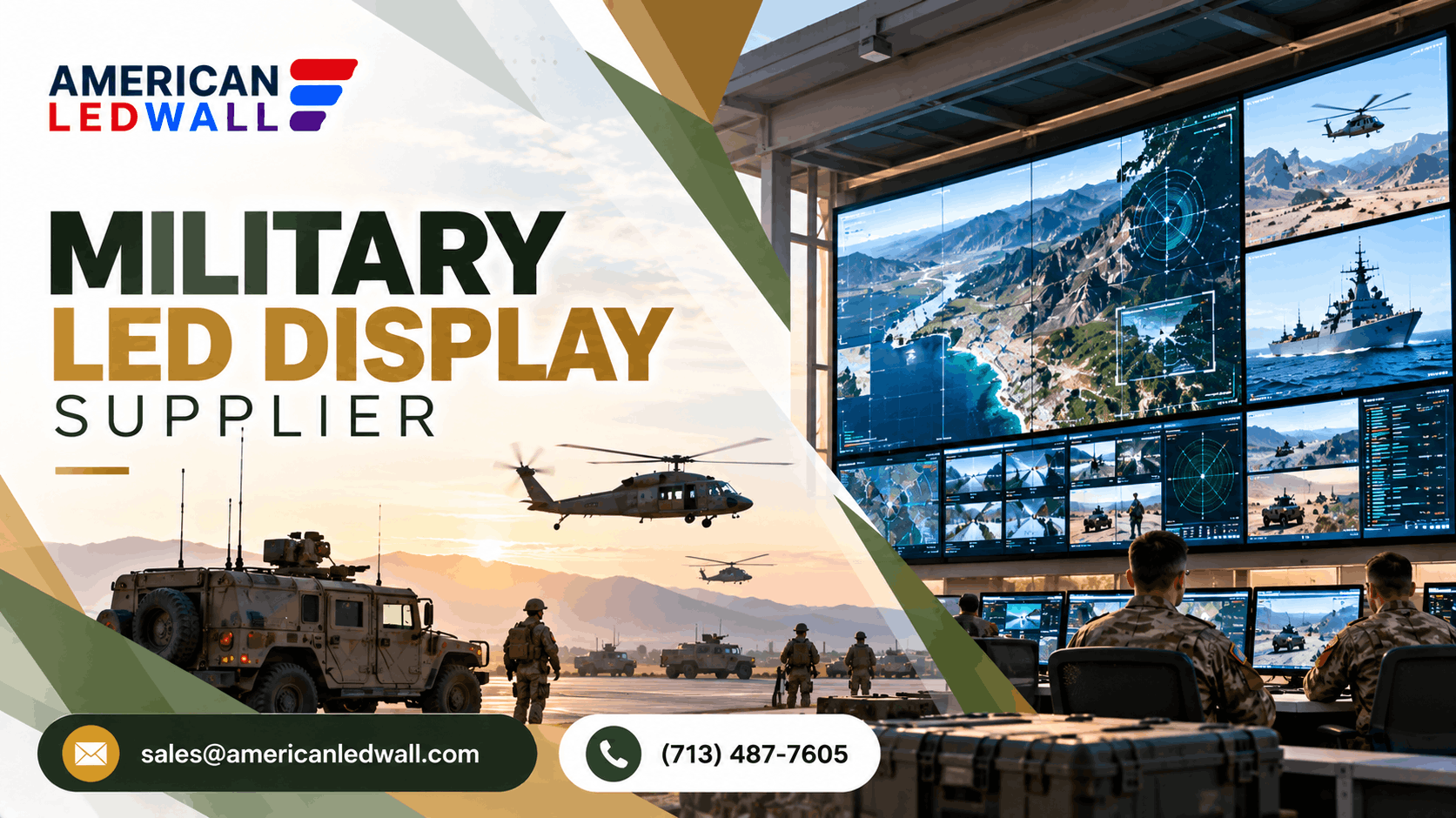
The first is the rugged platform display: a small, sealed, sunlight-readable monitor or panel built into a vehicle, a ship, an aircraft, or a field electronics kit. These are hardened and built to MIL-STD, and a whole set of suppliers specializes in them. The second is the large-format direct-view LED: the video walls and signs that go in command centers, briefing halls, training facilities, and across a base. This is the side American LED Wall builds, and it is what most people picture when they think of a wall of maps and feeds that a whole room reads at once. If you are speccing a shared screen for a room, you want the large-format side rather than a rugged panel-PC monitor, and the first job is knowing which one your project needs.
Here is the split at a glance:
| Rugged platform display | Large-format direct-view LED | |
| What it is | Small, sealed monitor or panel | Video wall or large sign |
| Where it goes | Vehicle, ship, aircraft, field kit | Command center, briefing hall, base |
| Who reads it | One or two operators up close | A whole room, or passing traffic |
| Key standard | MIL-STD, sunlight-readable | TAA compliant, fine or wide pitch |
How to Vet a Military LED Display Supplier
Start with compliance, because it is the gate that every military buys passes through. The Trade Agreements Act limits purchases above certain thresholds to products made in the United States or in a designated partner country. For the Department of Defense, the Defense FAR Supplement Buy American rules add their own origin requirements on top. Ask any supplier for the country of origin and the compliance documentation up front, because a product built in a non-designated country will not clear procurement, however good the price looks.
Compliance is necessary, but it is not the whole story. A supplier worth buying from is US-based or US-backed, so parts and help arrive fast. It can show real defense and government projects rather than stock photos. It supports the display for years with spare parts and a clear warranty, which is what our displays that cannot fail page is really about. And it understands that a military display often lives on a controlled network and is installed in a secure space, so it can speak to accreditation and site access instead of hearing those words for the first time on your project.
The simplest test of a supplier is whether it answers those questions plainly. The right one hands you origin documentation, project references, a support plan, and a straight spec for your room, without making you chase it. If it dodges the compliance question or cannot name a defense project, keep looking. You can also confirm a supplier builds to the rules on its TAA-compliant displays page before you ever pick up the phone.
Where Military LED Displays End Up
These displays show up across every service. In a command center, a wall carries the common operational picture that a watch team reads at once, the job we cover for Coast Guard command centers. In the highest-stakes operations rooms, like the ones in our LED walls at NASA guide, a wall runs continuously for years without going dark.
On a training base, the same technology replaces the projector in an auditorium. In 2025, Marine Corps University at Quantico put a fine-pitch LED wall about 11 feet by 20 feet into a historic hall, the kind of project our Marine Corps displays guide covers. Across the rest of the base, it runs outdoor message centers at the gates and screens in mess halls and classrooms, all of it serving military command centers and the people who run them.
Panels That Fit a Military Build
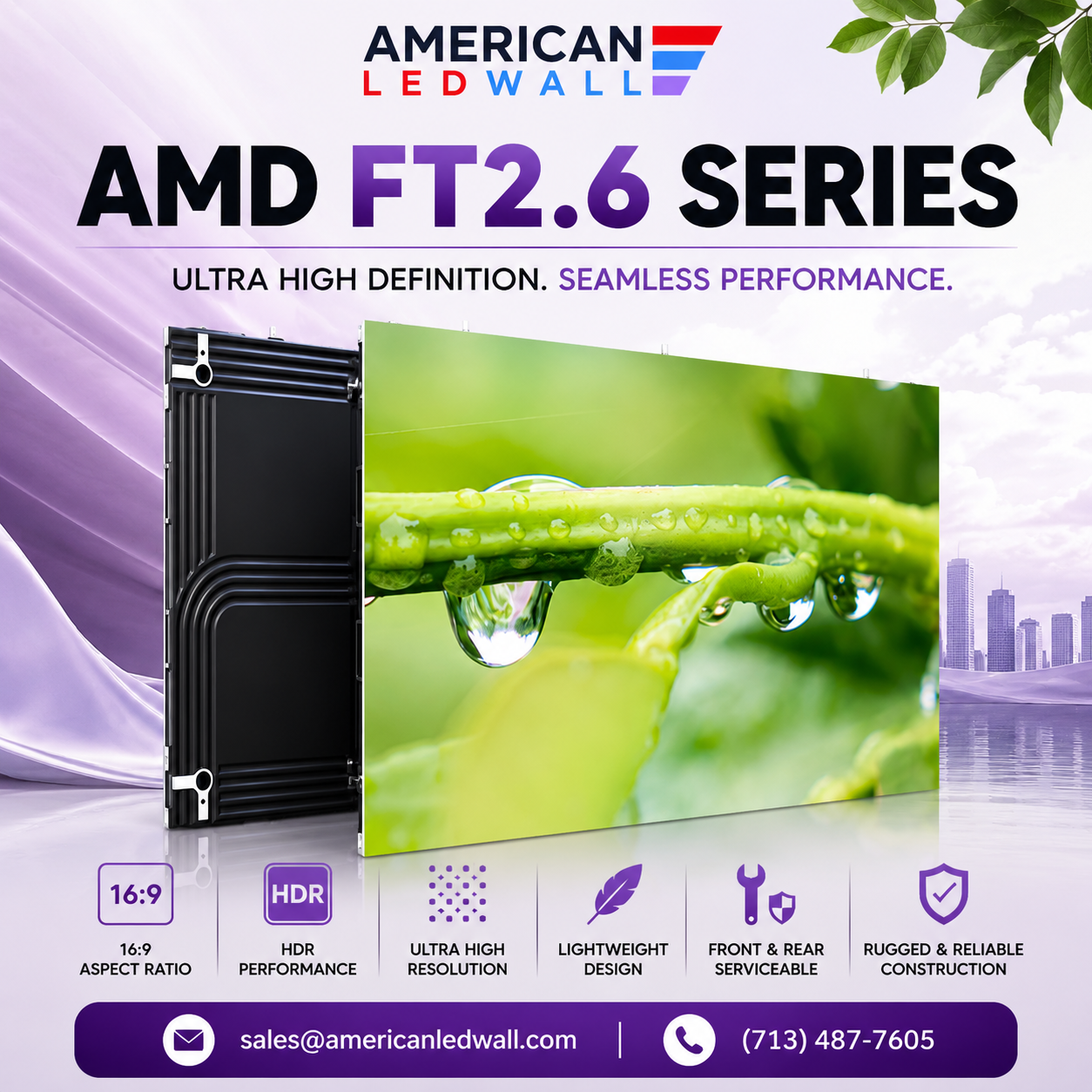
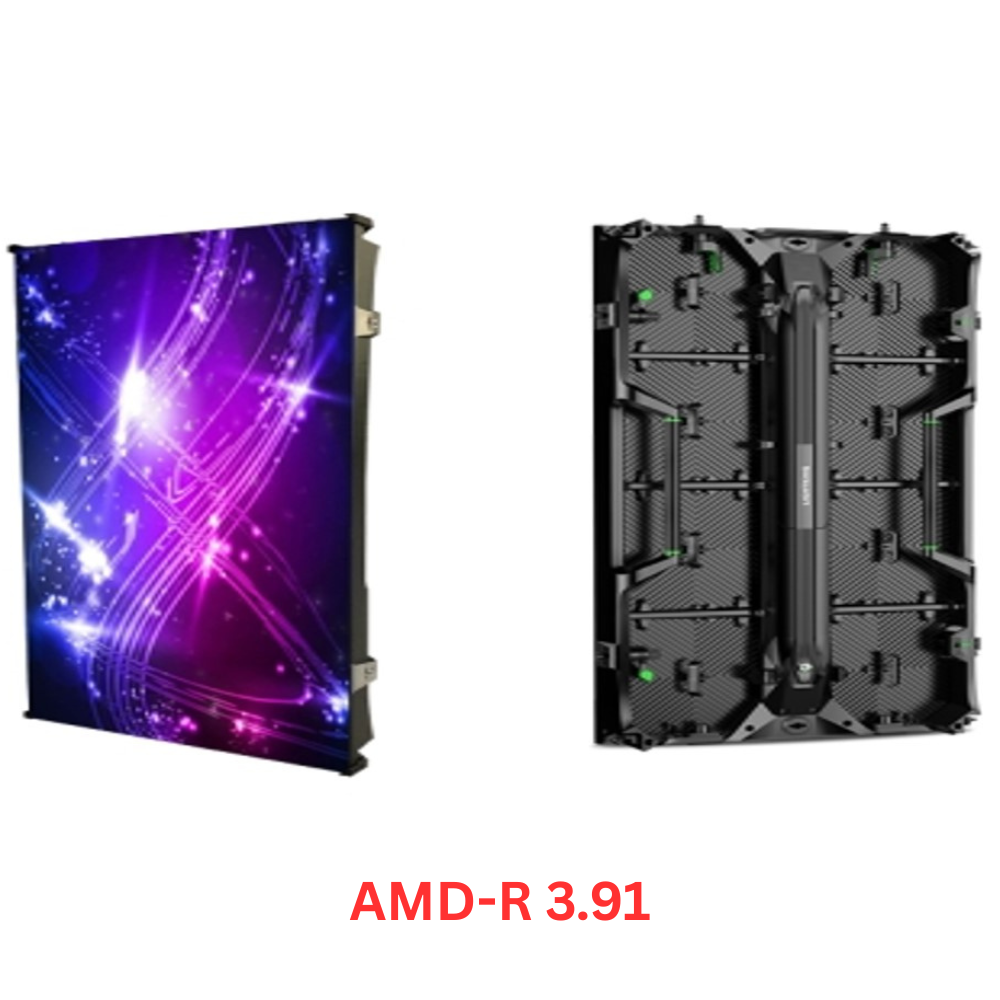
Here are three panels sized across those settings, one for a command or briefing wall, one for a covered area, and one for an outdoor gate sign.

Frequently Asked Questions
What is a military LED display supplier?
A military LED display supplier is a company that builds or provides LED displays for defense use and can prove the product meets federal origin rules and military demands. The best suppliers offer TAA-compliant products, country-of-origin documentation, long-term support, and real defense project references.
What makes an LED display military-grade?
A military-grade LED display is tested against standards like MIL-STD-810 for shock, vibration, dust, and temperature, and MIL-STD-461 for electromagnetic interference, and it clears federal sourcing rules. It also comes with documentation, long-term parts support, and a build made for years of hard use rather than a military label on a commercial screen.
Are military LED displays TAA compliant?
They can be, and for most federal purchases, they have to be. The Trade Agreements Act limits government buys above certain thresholds to products made in the United States or a designated country, and the Defense FAR Supplement adds Buy American rules for the Department of Defense. A compliant display ships with country-of-origin and TAA documentation.
What should I look for in a military LED display supplier?
Look for proven compliance with the Trade Agreements Act and DFARS, a US base of operations, real defense project references, long-term spare parts and warranty support, and an understanding of secure networks and base installation. Confirm the country of origin and documentation before you buy.
What is the difference between a rugged display and an LED video wall for the military?
A rugged display is a small, sealed, MIL-STD monitor built into a vehicle, ship, aircraft, or field kit. A large-format LED video wall is the shared screen in a command center, briefing hall, or base sign that a whole room reads. They solve different problems, so match the supplier to the one you need.
Can a military LED display be used outdoors on a base?
Yes. An outdoor base display needs an IP65 or higher seal, high brightness for sun, and corrosion resistance where bases sit near salt air. Indoor command and classroom displays do not need weather sealing, so the build follows where the display lives.
Talk to a Supplier That Can Prove It
The projects that go smoothly start with a company that can show its work: origin documentation, defense references, a support plan, and a build matched to the room and the mission. Ask for those first, and the rest of the decision gets easier.
If you are looking for a military LED display supplier for a command center, a base, or a training facility, send American LED Wall your setting, your room or site details, and your viewing distances, and the team will size the display, the pitch, and the compliance for the job. To rough out a size first, plan a display size in about a minute.
US-Based · TAA Compliant · Defense Proven
Need a Military LED Display Supplier?
Ask us for the things that matter: country-of-origin documentation, defense project references, and a support plan. Send your settings and viewing distances, and we will spec the display, the pitch, and the compliance, then give you a straight, itemized price.
