
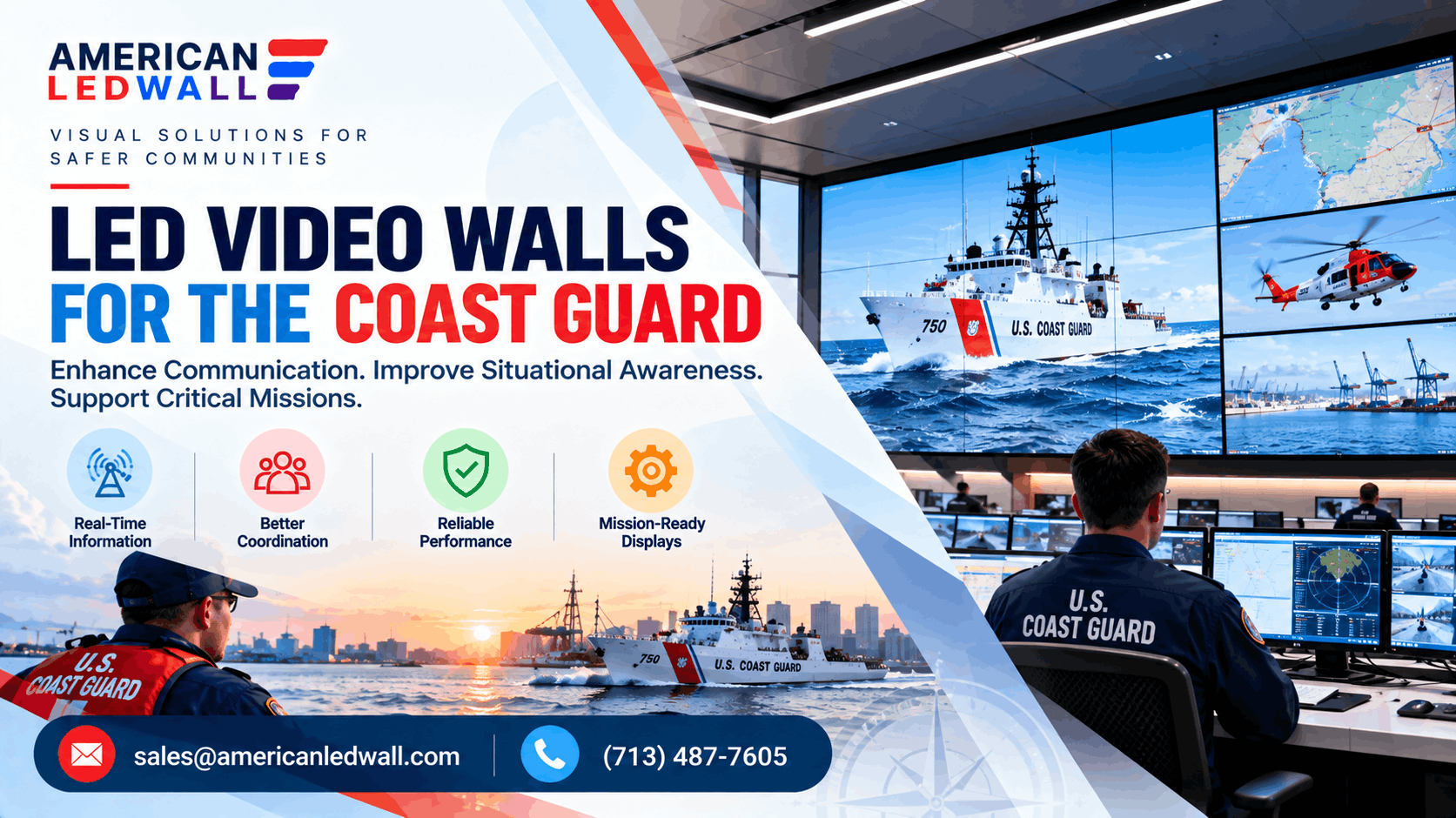
A Coast Guard watch stander sits in front of a wall that has to answer one question at a glance: what is happening on the water right now. Every vessel in the area, its heading and speed, the weather rolling in, the camera feeds from the harbor, and any search-and-rescue case in progress. Miss something on that wall, and a ship runs aground, or a mayday goes unanswered.
LED video walls for the Coast Guard are the shared displays that command centers and vessel-traffic watch floors rely on to keep that maritime picture in one place. This guide is for the program managers, integrators, and contracting officers who have to spec one, so it covers what fills the wall, where these rooms sit, what the hardware has to do, and how a Department of Homeland Security agency buys one that clears federal origin rules. The Coast Guard is a maritime service under Homeland Security, so its needs and its buying path both differ from a generic military job.
What Fills the Wall in a Coast Guard Watch Room
The content on a Coast Guard wall is specific, and it is not a slideshow. A vessel traffic center watches ship movements using Automatic Identification System tracks, radar, and harbor cameras, laid over an electronic nautical chart so every contact sits in its real position. Add live weather and sea state, the status of each open search-and-rescue case, and feeds from other agencies, and the wall becomes one shared operational picture the whole watch reads at once.
Layer by layer, that is what the wall pulls together:
| Layer | What it adds to the picture |
| AIS | Each vessel’s identity, heading, and speed |
| Radar | Contacts that are not broadcasting AIS |
| Nautical chart | The waterway itself, under every contact |
| Weather and sea state | Conditions shaping the operation |
| Harbor cameras | A live visual on a specific vessel or area |
| Search-and-rescue status | Open cases and their progress |
One shared view is the point. When that information is scattered across separate monitors, a watch stander has to piece it together in their head under pressure, which is exactly when things get missed. A single wall keeps the room working from the same picture, so a supervisor and a controller are looking at the same contact when a decision has to be made fast. That is the whole case for a command center display setup.
One clarification worth making early: the wall shows the picture, it does not generate it. The tracks, the chart, and the shared picture come from the Coast Guard systems that feed it, so a real project is as much about integrating with those systems as it is about hanging the panels.
The Rooms That Run the Watch
The Coast Guard runs these walls wherever a team holds a maritime watch. Its Vessel Traffic Service is the clearest example: the Coast Guard operates 12 Vessel Traffic Centers in ports like Houston-Galveston, San Francisco, Puget Sound, and the Lower Mississippi River, each one a watch floor that keeps ships from colliding or running aground in busy, hazardous waters. Many sit inside a Coast Guard Sector. The vessel-traffic center for the Lower Mississippi River, for instance, is on the third floor of Sector New Orleans.
Beyond vessel traffic, Sector and District command centers coordinate search and rescue, law enforcement, and port security around the clock, and joint harbor operations centers bring the Coast Guard together with port and Navy partners on one floor. The same build shows up well beyond the Coast Guard: a security operations center on a watch floor, a command and control video wall in a joint task force, and the command center video wall in other federal agencies. For a very different mission with the same demands, our NASA mission control walls guide spaceflight operations.
What a Maritime Watch Floor Demands From the Hardware
A wall on a watch floor, like any control room video wall, is judged on whether it holds up, not on how it looks in a demo. It runs every hour of every day, and people make safety-of-life decisions off it, so a few requirements matter more than the rest.
Pixel pitch comes first, set by how close the watch standers sit. Operators reading dense charts and tracking data a few feet away want a fine 0.9 to 1.5 mm pitch, so a contact does not blur into its neighbor. After that, it is reliability. A wall that cannot go dark uses redundant power and data and hot-swappable modules, so a failed part is pulled and replaced from the front while the watch keeps running. Color has to be calibrated and consistent because a controller reads status by color, and every panel has to match. And since the room is quiet and staffed 24/7, the wall should run cool and be nearly silent. Our always-on display systems page covers that reliability side, and direct-view LED technology is what makes a bright, always-on wall with no seams possible in the first place.
One thing sets a maritime service apart. A fixed shore command center is the common case, but a rugged or transportable build can matter for a mobile command post or a harsh coastal site, so match the wall to the room rather than assuming one size fits every position.
Panels for a Watch Floor
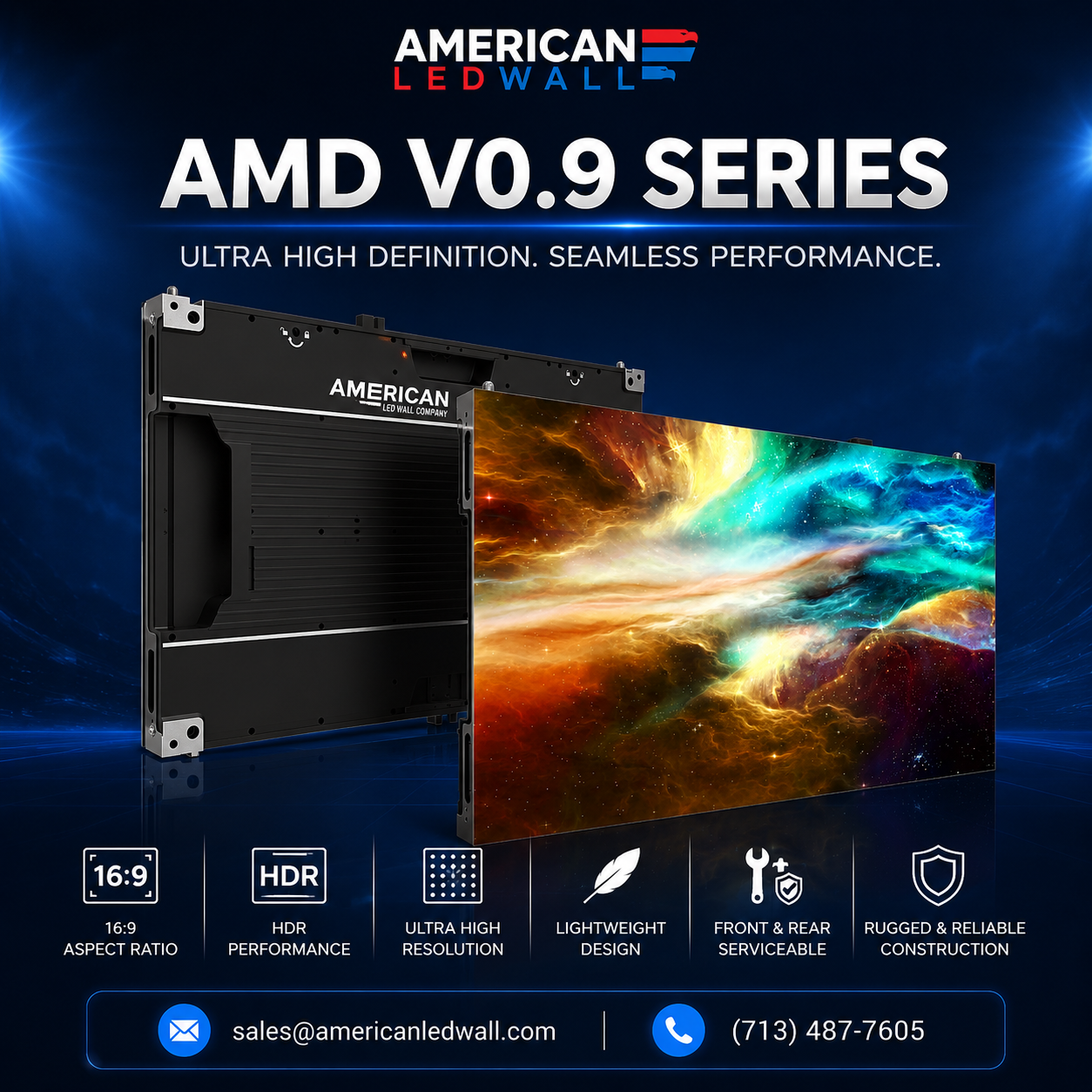
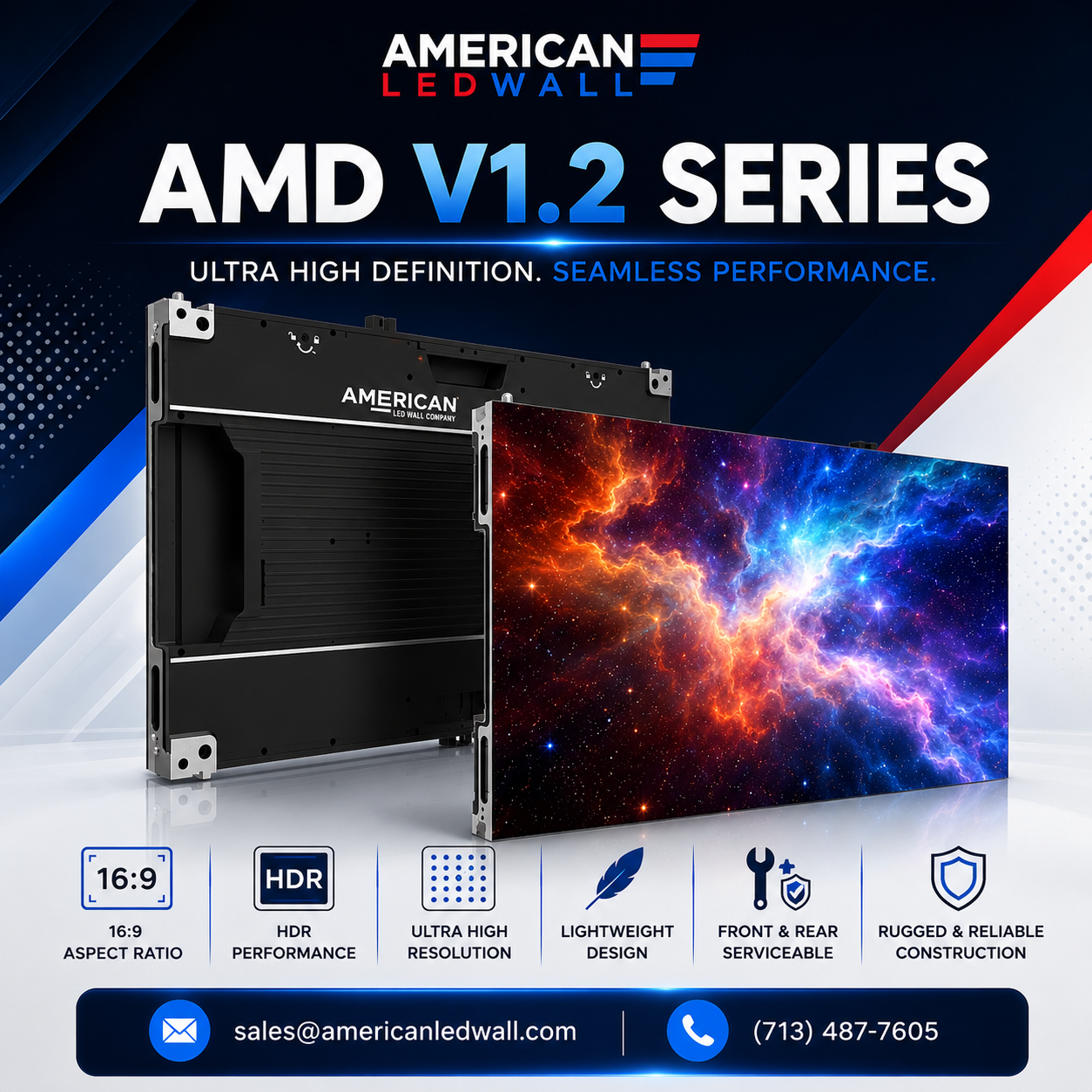
For a watch-floor wall, the fine-pitch panels below are the place to start, all close-viewing indoor panels sized by how far the operators sit from the screen.

Buying LED Video Walls for the Coast Guard Under Federal Rules
This is where a federal purchase follows rules a commercial job never touches. Buying LED video walls for the Coast Guard runs through two origin rules. The Buy American Act pushes agencies to buy domestic end products, favoring U.S.-made goods on many purchases. Above certain dollar thresholds, the Trade Agreements Act takes over and limits buys to products made in the United States or in a designated partner country. A wall built in a non-designated country will not clear either gate.
The Coast Guard is part of the Department of Homeland Security, so a contracting officer screens origin and compliance before price ever enters the conversation. Ask for the country of origin and the compliance paperwork up front, not at award. Our TAA-compliant manufacturing is built to meet these rules. Past compliance, budget for the same pieces any large wall needs, the processor, the mounting structure, calibration, and a spares plan, which our video wall budgets guide lays out.
Clearance, Networks, and Getting a Crew on the Floor
The hardware is only part of the project. A Coast Guard watch floor is a secure government space, so the wall usually ties into controlled or classified networks, and the installation runs under access rules the facility sets. Crews and equipment are screened, work happens in scheduled windows, and cabling and mounting follow federal safety rules rather than shortcuts.
None of that changes which wall you buy, but it shapes who can install it and how the wall connects. Confirm early that a crew can meet the site and network requirements, and that the display works with the secure systems the watch already runs, so nothing surfaces as a surprise once the project starts.
Frequently Asked Questions
What displays do Coast Guard command centers use?
Coast Guard command centers and vessel traffic centers use large direct-view LED video walls that show the maritime picture in one place: AIS vessel tracks, radar, nautical charts, weather, harbor cameras, and search-and-rescue case status. The walls run 24/7 and are built with redundancy, so the watch never loses its display.
What video wall fits a maritime operations center?
A fine-pitch direct-view LED wall, usually 0.9 to 1.5 mm, for operators reading charts and tracking details up close, with redundant power and data, hot-swappable modules, and calibrated color. Match the pixel pitch to how far the watch standers sit from the wall.
How does the Coast Guard track vessels on a video wall?
The Coast Guard tracks vessels using the Automatic Identification System, radar, and cameras, laid over an electronic nautical chart. Each ship shows as a contact in its real position, so a watch stander sees every vessel in the area, its heading, and its speed on one shared display.
Are LED video walls TAA compliant for government use?
They can be, and for many federal buys, they have to be. The Trade Agreements Act limits government purchases above certain thresholds to products made in the United States or a designated country, so a compliant wall comes with country-of-origin and TAA documentation. Confirm compliance before buying for a Coast Guard or other federal program.
Do Coast Guard displays have to be Buy American compliant?
Often, yes. The Buy American Act pushes federal agencies to buy domestic end products on many purchases, and above certain dollar thresholds, the Trade Agreements Act applies instead. Which rule governs a given buy depends on the value and the funding, so a contracting officer confirms the origin requirement for each purchase.
What is a command center video wall?
A command center video wall is the shared front-of-room display that an operations team reads to run a mission. It brings separate data sources into one continuous surface, so everyone on the watch works from the same picture at the same time, which speeds decisions during a fast-moving incident.
Spec a Wall for Your Watch Floor
The watch floors that do this well treat the wall as operational equipment. They match the pitch to the operators, build in the redundancy that keeps it lit, and confirm origin compliance before a purchase order moves.
If you are speccing LED video walls for the Coast Guard, another maritime or federal watch center, or any operations floor that cannot go dark, send American LED Wall your room layout and viewing distances, and the team will size the wall, the pitch, and the redundancy for the job. To get a rough size first, rough out a size in about a minute.
Command Center Walls · 24/7 Redundancy · TAA Compliant
Planning a Wall for a Coast Guard Watch Floor?
Tell us your room layout, viewing distances, and networks. We will spec the pitch, the redundancy, and a TAA-compliant build, then give you a straight, itemized price for the display side.
